
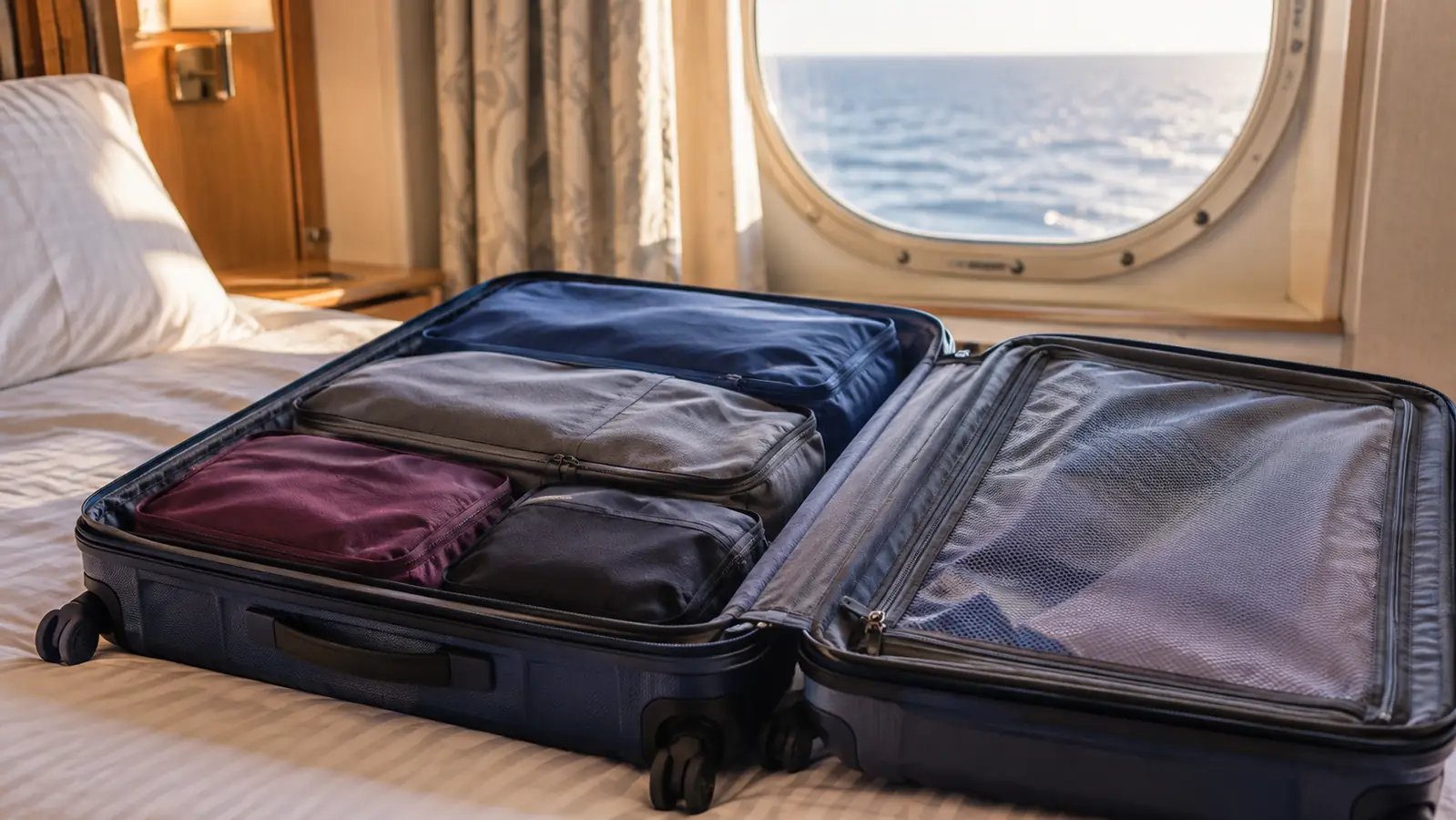
Here is the short answer. If you are flying to the port and the whole trip has to fit in a carry-on, compression packing cubes will buy you more room than anything else you can put in that bag. If you drive to Port Canaveral, check a medium spinner each, and unpack into a cabin the size of a walk-in closet, the BAGAIL 8 set packing cubes are the better tool, and after three sailings with them I do not think it is close.
I have packed for 14 cruises since 2009, most of them 4 to 7 night Caribbean runs out of Port Canaveral, plus Alaska out of Seattle in 2019 and the Mediterranean out of Barcelona in 2023. My husband Gus and I book an interior or oceanview cabin to keep the fare down, so every square inch of storage matters. The BAGAIL set has been in both suitcases for our last three sailings. I borrowed a compression set from a neighbour for Barcelona and handed it back in her driveway. This is what each one is actually good at.
| BAGAIL 8 Set Packing Cubes | Compression Packing Cubes | |
|---|---|---|
| What it does to your clothes | Holds them in a fixed rectangular bundle so they stay folded and separated | A second zip pulls the top panel down and squeezes the whole load flat |
| Space it actually saves | Organizes the room you already have, it does not create more | Removes real air from the bag, which is the difference on a carry-on only trip |
| Weight in the suitcase | 350 g for the whole 8 piece set, barely more than a paperback | Heavier cube for cube on the borrowed set I used, because of the second zip |
| Finding anything | See-through panels and a handle on each cube, so you can pull one out without unpacking | You unzip to look, and unzipping means the compression is gone |
| Wrinkle protection | The fabric holds clothes in place, so Gus's dinner shirt arrives flat | Compression presses a crease into the middle of everything |
| Holding shape when full | Rectangular and structured, it stacks in a drawer like a file | Goes soft and lumpy once it is compressed down |
| Unpacking into a cabin drawer | Lift the cube straight in, ten minutes for two suitcases | Unzip each one flat and move every item by hand, closer to half an hour |
| Best for | Two checked spinners, a drive-to port, and an itinerary with a formal night | Carry-on only, or a cold weather sailing where the bulk is the problem |
Read that table the way I wrote it, as a list of jobs rather than a scoreboard. Compression cubes win the two rows people care about before they leave the house, which are space and flatness. The BAGAIL set wins the rows you live with for seven nights in a small cabin, which are finding things, keeping shirts from creasing, and getting unpacked before the safety drill.
Where BAGAIL Wins
The thing the BAGAIL set does that compression cubes cannot is behave like a drawer. Each cube is rectangular and holds its shape when it is full, so when we reach the cabin I open the suitcase, lift the cubes out one at a time, and set them into the dresser. Nothing gets unfolded. Nothing gets refolded. On the twelfth cruise we were finished unpacking in about ten minutes, which matters more than it sounds when the safety drill is in forty. Before the set, I did the thing most people do first. I packed into two big zip-top bags and a grocery sack for the shoes, on the theory that a bag is a bag. It held up for about a day. By the second morning everything in the drawer had been rummaged through twice, clean clothes were mixed in with worn ones, and I was refolding on the bed while Gus waited by the door. The grocery sack gave out somewhere off Freeport. That is the honest reason I bought cubes at all.
The set has eight pieces across a few sizes. BAGAIL gives the largest as 12 by 11 by 4.7 inches, with a total set weight of 350 g and a listed load capacity of 10 pounds. That weight is the part I did not expect to care about. We each check a medium spinner and the airline limit is the airline limit, so a set of organizers that adds barely more than a paperback to the bag is a set I will keep using. The 4.7 inch height is the other number that matters. The dresser drawers in the interior cabins we book are about five inches deep, so a full cube slides in with its lid closed and clears the frame instead of jamming. A soft sack will not do that. It flops down the back of the drawer and eats twice the space it should. The listing calls the fabric smooth and durable, and it has survived three round trips through Port Canaveral baggage handling without a seam going.
The see-through panels and the handles are the two small features I use every single day of a cruise. Gus's cube is his and mine is mine, and I can look at the stack in the drawer and know which one holds his swim trunks without opening anything. The handle means I can carry one cube out to the pool bag or set it on the bathroom shelf as a small case. Compression cubes usually have neither, because a compression cube is built to be squashed flat and left in the bag until you get home.
Where Compression Cubes Win
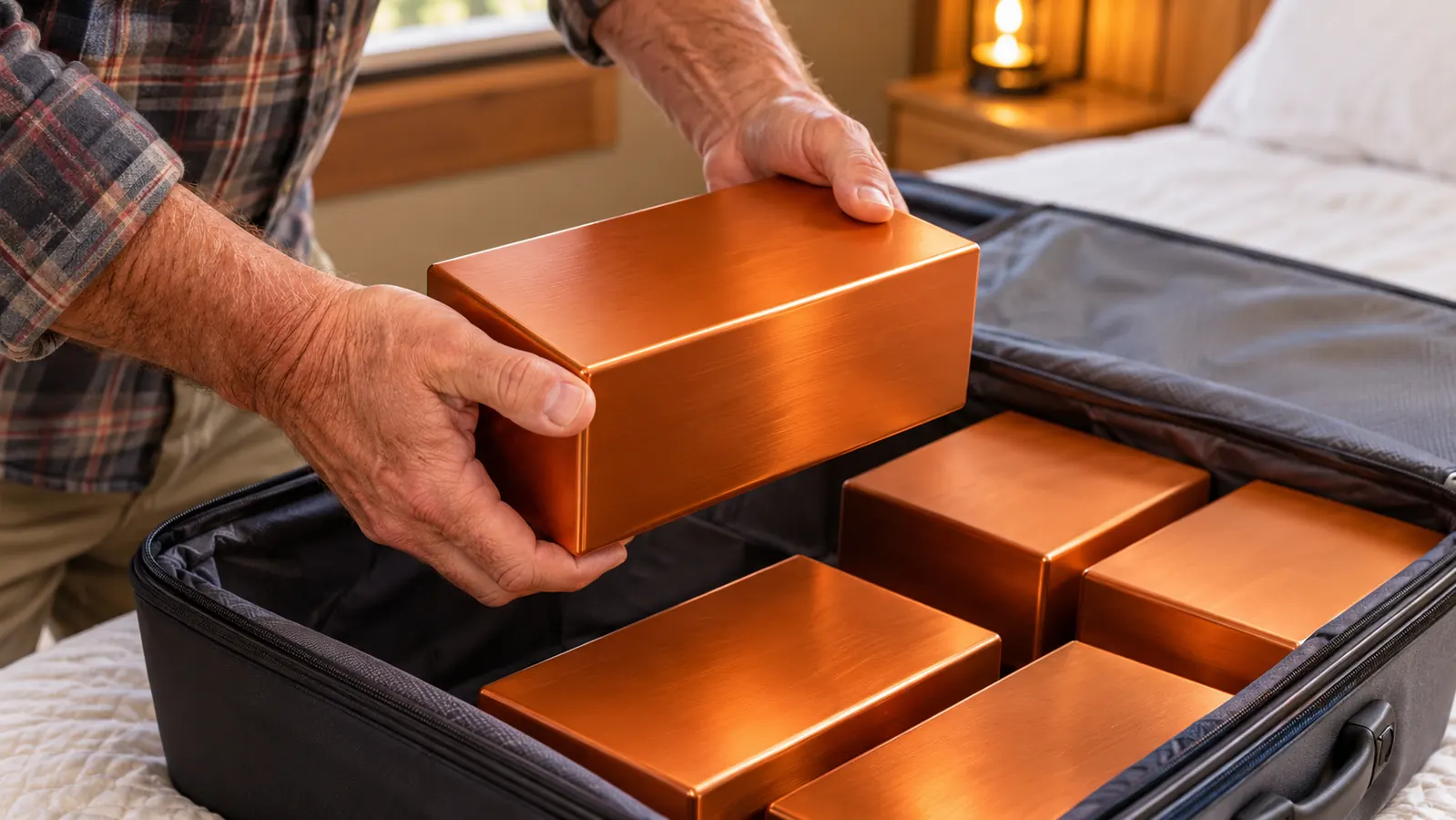
Now the honest part. Packing cubes organize space. They do not make space. If you are down to one carry-on and a tote for a seven night sailing, the BAGAIL set will make that bag tidy and it will not make it hold one more shirt. A compression cube has a second zip that pulls the top panel down over the load and pushes the air out, which is a real physical change rather than a tidier arrangement. Barcelona taught me that in the first ten minutes. I had the borrowed set in my medium spinner and got our clothes for the first five days of that sailing into a bag I had already resigned myself to overstuffing. The difference is not subtle when you are standing on a scale at the check-in desk.
The other place compression wins is bulk. Sweaters, fleece, a puffy layer for Alaska. Anything that is mostly air compresses beautifully, and a cube that pulls down to half its height is worth the extra fiddling. That is also where I learned the trade. Compression does not reduce weight, only volume, so on the Barcelona trip I still had to move a pair of shoes into the tote at the airport because the bag was over the limit while looking perfectly reasonable. And a compressed cube unzips into a flat rectangle with everything pressed into a crease. Gus's dinner shirts came out of the borrowed set looking like they had been slept in. I ironed one of them on the second sea day, in a cabin bathroom, with a travel iron I would not bring again. That is the row where BAGAIL wins by a mile, and it is not a small row on a sailing with a formal night.
Three sailings in, the cubes are still the first thing I put on the bed
The 8 set runs across both medium spinners: his clothes, mine, the swimwear, and one cube that lives as the formal night kit. Ten minutes to unpack into the drawers, and no refolding for a week.
Amazon Check Today's Price on Amazon →How the 8 Set Divided Up Two Suitcases
People ask how eight pieces split between two people for a week. In our case it is not even. Gus gets three of the mid-size cubes for shirts, shorts, and the things he would otherwise leave in a heap on a chair. I take two for my own clothes, because I am the one who cares about creases. The rest of the set handles the jobs that used to be plastic grocery bags, and the 10 pound load capacity is generous for any one of those jobs. The shoe cube is the one I would fight you over. It keeps the sandals away from everything else, and it means the bottom of my suitcase is not gritty by day three, which is a small thing that improves a cabin.
One cube is swimwear, and it stays half packed for the whole sailing, which is the best single use of a packing cube on a Caribbean itinerary. One cube is the formal night kit, and it sits in the top of my suitcase until the second sea day, which is why Gus's shirt arrives flat while I am still working out what to wear. The last pieces take shoes, charging cables, and the small items that otherwise migrate to the bottom of a bag and stay there until you get home. On the Alaska sailing this split would have been different, because bulk was the problem, not sorting, and that is the trip where I would have wanted the compression set instead. Nothing in the BAGAIL set went unused on any of the three Caribbean sailings.
The cubes did not give us one extra inch of suitcase. They made the inches we had behave, which on a seven night sailing is the same thing.
That is the test I apply to anything that earns a spot in the suitcase now. Not whether it looked clever in the box, but whether it got used by day three. The set passed that test on the first morning, when I opened my suitcase in an interior cabin and did not have to think about where anything went.

The Zipper, the Handle, and the Ten Minute Unpack
The zips decide whether a packing cube lasts three cruises or one. BAGAIL uses a double way zipper with extended cord pulls, and the cord pulls are the reason I can open a full cube with one hand while holding the bathroom door with the other. A set I bought years ago had metal tabs instead, and one of them came off somewhere between the terminal and the cabin, which left me with a cube I could only close by wedging a hair tie through the slider. These have not given me a single problem in three sailings, and the drawstring closure on the smaller pieces has held too.
The listing describes the fabric as water resistant, and I tested that by accident. A damp swimsuit went into its cube after Cozumel and sat against a folded shirt for the rest of the afternoon. The shirt was dry. I would not put a soaking wet suit in with clothes on purpose, but for the everyday damp of a pool deck it does the job. The same fabric is part of why creases stay out, because clothes are not shifting against each other all day in the bag the way they do in a loose suitcase. On the Barcelona trip, with the compression set, I repacked twice in ten days. With the BAGAIL set on a seven night run I repack once.
One more note on the ten minute unpack. It is ten minutes because the cubes come out as units. With compression cubes the same job runs closer to half an hour, because you unzip each one flat and move every item into a drawer by hand. On a seven night cruise you do that twice, once at each end, and the second time is the worst of it because you are doing it at six in the morning with a departure card in your teeth. Three sailings in, I know which of those two jobs I would rather spend my first afternoon on.
Who Should Buy Which
Buy the BAGAIL 8 set if you check a bag, if you sail out of a drive-to port like Port Canaveral, and if you unpack into cabin drawers rather than living out of an open suitcase for a week. Buy it especially if the itinerary has a formal night, because the cube holding Gus's shirt and my dress is the reason neither of them came out creased. It is also the right buy if you want the bag to stay organized on the way home, which is when most packing systems fall apart and when a tidy cube is the difference between laundry and a suitcase full of it.
Buy compression cubes instead if you fly to the port, if you are working with carry-on only, or if you are packing for cold weather and bulk is the problem. A compression set is the better tool for Alaska and the wrong tool for a Caribbean sailing where you unpack into a drawer on day one. If you already own a compression set and you are on the fence, the honest answer is that these two solve different problems, and plenty of people end up keeping both.
Eight pieces, two suitcases, ten minutes on the first afternoon
The 8 set has been in both spinners for three sailings now. It is the first thing I put on the bed when the suitcase comes out, and the last thing I zip before we leave the cabin.
Amazon See Current Price on Amazon →