
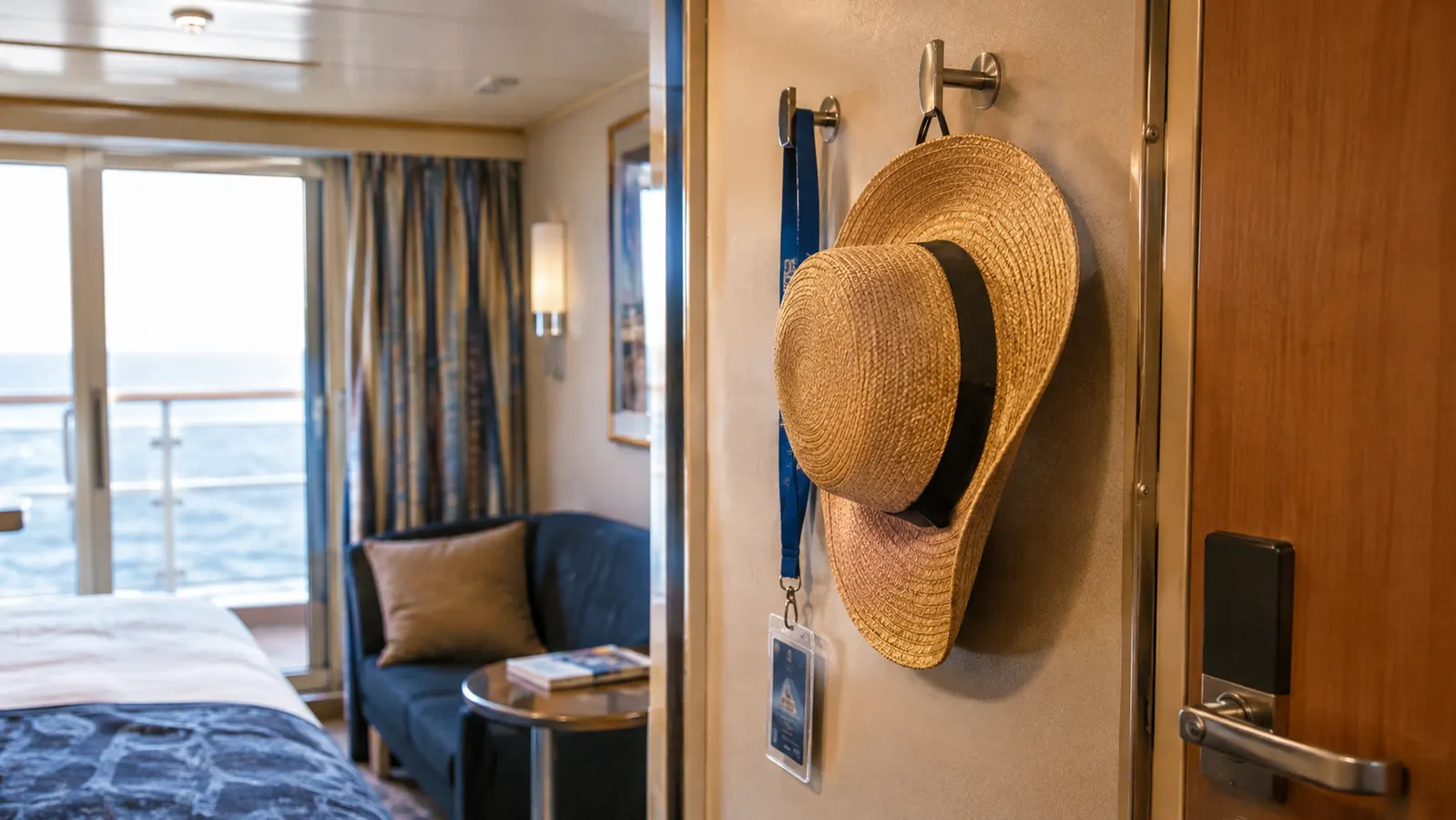
The first thing I do when we walk into a cabin is look at the walls. Not the bed, not the view, not the little bottle of sparkling wine if there is one. The walls. Because a cabin on a 7-night sailing holds two people and about four square feet of usable flat surface, and everything you brought has to live somewhere.
Before our ninth cruise, I bought a 10-pack of Neosmuk magnetic hooks. Ten small steel hooks, small enough to sit in the palm of my hand, in a zip pouch that now lives in my checked suitcase between sailings. We have used them on six cruises since, from Port Canaveral to Seattle to Barcelona. They have never failed to stick to a cabin wall, and I have never lost one.
The Quick Verdict
The cheapest cabin fix I own. Ten hooks, no adhesive, no damage deposit, and they come off the wall in one second on the last night.
Amazon Check Today's Price →Ten hooks, one zip pouch, six cruises and counting
These are the ones in my suitcase every single trip. Walls and ceilings in cruise cabins are metal, and that is all these need.
Amazon Check Today's Price on Amazon →How I've Used It
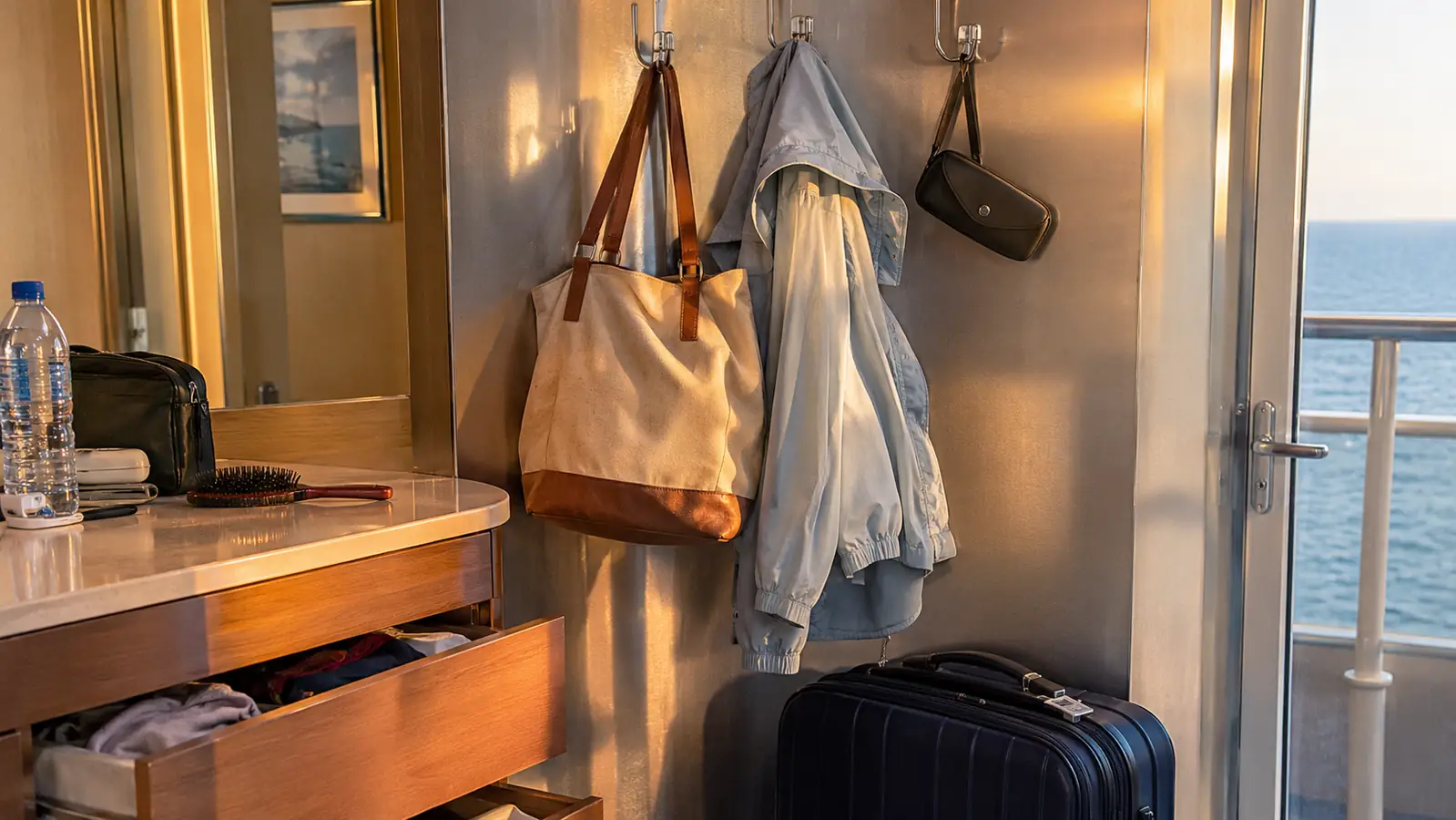
The setup takes about ninety seconds and it is always the same. Two hooks by the door for lanyards and hats. Two in the bathroom, one for the toiletry bag and one for wet swimsuits. Three along the wall for day bags and Gus's jacket. One by the bed for my glasses case. Two spare, because something always comes up.
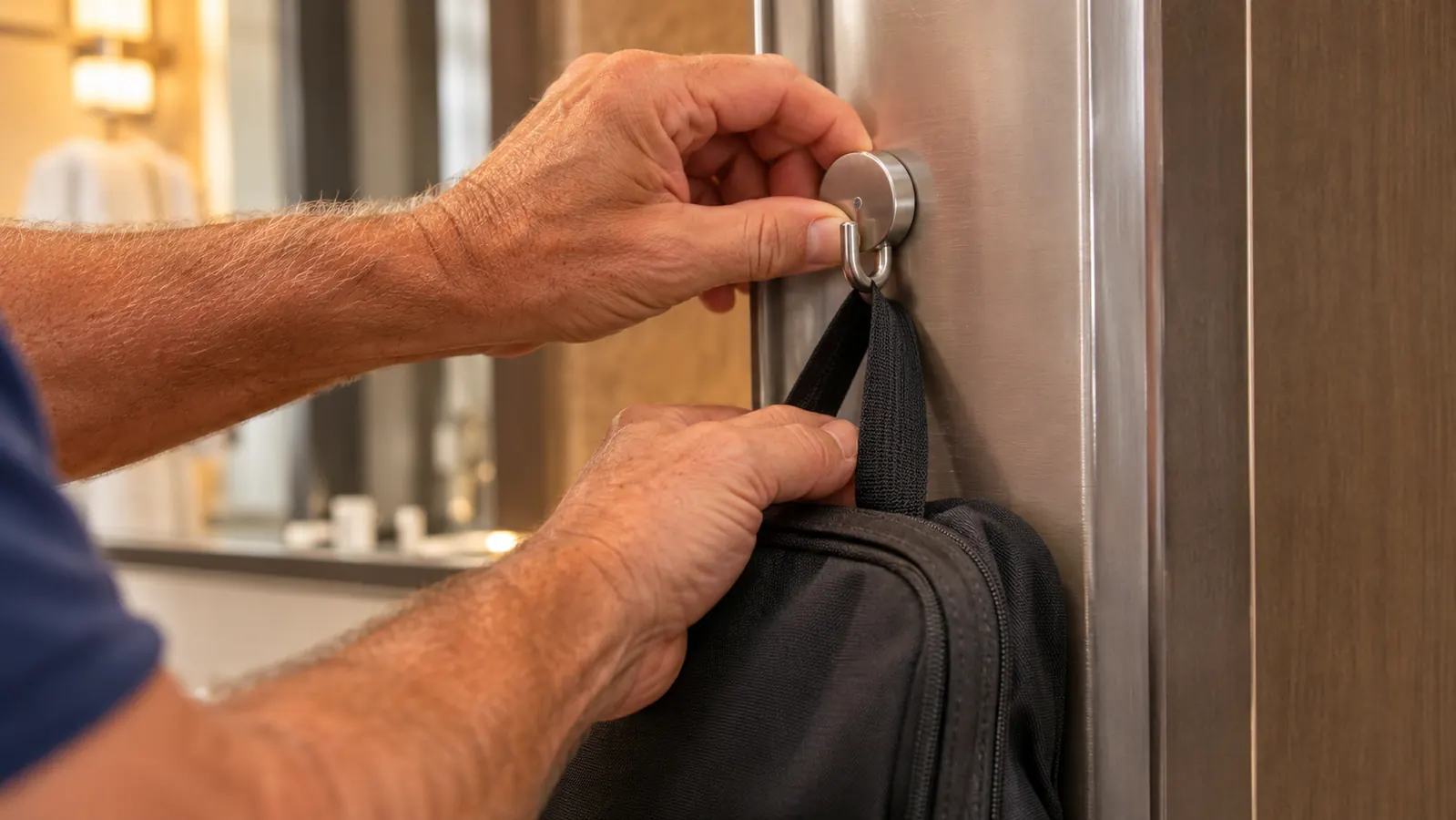
That is the whole system. No tools, no tape, no praying that the adhesive will hold on a surface that turns out to be slightly textured. You press the hook flat against the metal, it snaps, and you hang something on it. When you want it somewhere else, you slide a fingernail under the edge and it comes off with a small pop.
Before the Neosmuk hooks, I tried the adhesive kind. I bought a pack of plastic hooks with foam tape on the back and stuck four of them to the wall beside the closet on our eighth cruise. Two of them let go the first night. The third held until the humidity got to it on day three, and the fourth took a patch of paint with it when I pulled it off. I spent the last morning of that cruise on my knees with a damp washcloth, trying to disguise the mark before the steward came through. That is what sent me looking for a magnet, and the Neosmuk pack went into my suitcase before the next sailing. I have not bought an adhesive hook since.
I should be clear about what these are. They are steel hooks with a magnet in the base. The listing says 80 pounds of pulling force under steel, and the attribute field gives a maximum weight recommendation of 6 pounds, which is the number I actually plan around. I have never hung anything close to 80 pounds on a cabin wall and I do not intend to start. A wet swimsuit and a toiletry bag are the real workload here, and for that they are more than enough.
What the Neosmuk Hooks Actually Are
The shape is a cylinder, a little steel tube with a hook arm joined to the side and a flat magnetic face on the bottom. Neosmuk coats the base in four layers, nickel, copper, more nickel, then an epoxy topcoat. That sounds like marketing, but it matters on a ship. Cabin air is humid and salty, and a bare magnet in that environment will start to bloom with rust inside a week.
Six sailings in, the finish on mine is still intact. No rust spots, no flaking, no discoloration where my fingers handle them. The only wear is a faint scuff on the hook arm of the one that lives by the door, from the metal clip on my lanyard. That is cosmetic and I caused it.
The tube design is the reason these hold better than a flat magnetic disc. The listing claims about 50 percent more force than a none-tube magnet, and while I have not run a pull test in my garage, I can tell you what the practical difference looks like. A flat disc magnet of the same diameter concentrates its pull right at the surface. The tube design puts more magnetic material in contact with the wall and gives you a real edge to grip when you want to move it.
I have a set of plain flat disc magnets in the garage, the kind that come in a hardware store bin, and I brought two of them along on the ninth cruise to compare. Both slid. Put a toiletry bag on a flat disc and it will hold for an hour, then start walking down the wall a fraction of an inch at a time until the bag is resting on the counter. The Neosmuk hook did not do that, and I think part of the reason is that the hook arm stands out from the wall far enough that the load hangs straight down instead of levering against the panel. I stopped bringing the flat ones after that trip.
The catch is that a strong magnet is a strong magnet in both directions. On the first morning of our eleventh cruise I set one down on the desk next to my e-reader and it snapped onto the metal trim of the desk drawer hard enough to make me jump. Nothing broke. But if you have a pacemaker, or you keep credit cards loose in your bag, keep these away from both.
Six Cruises of Real Use
Here is where the Neosmuk hooks earned their spot, one cruise at a time.
**Cruise 9, Caribbean, interior cabin.** The first trip. I hung two lanyards by the door and a toiletry bag in the bathroom, and I remember standing in the middle of the cabin thinking that the floor was finally clear. That sounds small. It is not small when you are tripping over two pairs of sandals at 2 in the morning.
**Cruise 10, Caribbean.** Gus's jacket went up on a hook by the closet, which meant it stopped living on the end of the bed. He also discovered, on his own, that a hook by his side of the bed held his watch and his glasses at night. I had not thought to tell him. He figured it out and was very pleased with himself.
**Cruise 11 and 12, Caribbean.** These were the trips where the hooks stopped being an experiment and became part of unpacking. The bathroom hook for wet swimsuits is the one I would not give up. On a 4-night sailing with two port days, you rinse a suit every evening, and draping it over the shower rail means it is still damp at dinner the next day. Hanging it from a hook on the wall with air on both sides, it dries overnight.
One sea day on the twelfth cruise I had a wet swimsuit, a beach towel that refused to dry, and a paper towel animal the steward had left on the bed that I did not have the heart to throw away. I hung the suit from the bathroom hook, draped the towel over the back of a chair, and balanced the little towel creature on top of the wall hook by my side of the bed, where it stayed for four days looking faintly ridiculous. That is not a load test. It is just the sort of thing that happens when you have a hook and no drawer to put something in. The suit dried by morning and the animal survived until the last night.
**Cruise 13, Alaska out of Seattle.** Colder, wetter, more layers. This is where the three wall hooks did the most work, because a rain shell and a fleece and a hat all need somewhere to go that is not the floor. I used one hook for the wet shell and one for the dry layers, kept them apart, and the cabin did not smell like a wet dog for a week.
**Cruise 14, Mediterranean out of Barcelona.** By this point the count is a ritual. On the last night, I peel each hook off the wall, one at a time, and count them into the pouch. Ten. Ten. Ten. Ten. Ten. Ten. I have never come up one short.
What I Liked
- Press-on, peel-off. No adhesive, no residue, nothing to explain to the cabin steward.
- Four-layer coating has held up through six humid, salty sailings with no rust.
- The tube base holds a wet swimsuit or a loaded toiletry bag without creeping down the wall.
- Ten in a pack means spares, and I have never actually needed a spare.
- Small enough to pack in a zip pouch and forget about until you need them.
Where It Falls Short
- Only works on metal. Cabin walls and ceilings generally are, but a lot of the bathroom is not.
- The maximum weight recommendation is 6 pounds, well under the headline 80-pound pull figure. Plan around the 6.
- They can slide rather than grip on very smooth painted panels if you bump them hard.
- A magnet this strong needs care around pacemakers and loose credit cards.
- You will want a couple of them in a spot where the wall is not metal, and there is nothing you can do about that.
On the last night of every cruise I peel the hooks off the wall one at a time and count them into the pouch. Six sailings now, and I have never come up one short.
Where They Fall Short
Three things you should know before you buy.
First, metal only. Cabin walls on the mainstream lines we sail are metal, and the ceiling usually is, which is why you will see people hanging a whole outfit from above. But the bathroom is a mixed bag. On our last two ships the wall behind the toiletries shelf was metal and the shower surround was not. I found out the hard way, standing in a bathroom holding a hook and a wet bag with nowhere to put either.
The metal question is worth checking on day one, before you unpack. Walk into the bathroom, hold a hook against the wall behind the sink and see if it grabs. If it does, leave one there for the toiletry bag. If it does not, try the door frame or the wall just outside the bathroom, and plan to keep the bag on the shelf instead. On the Alaska ship the bathroom wall was metal and the shower surround was glass, so I had one hook working and one spot that was useless. It took me about ten seconds to find that out, which is the whole advantage of a hook you can move without leaving a mark.
Second, the weight question. The listing leads with 80 pounds of pulling force and that number is real in the sense that the magnet will hold that much straight down against a steel plate. But the attribute field says 6 pounds maximum weight recommendation, and that is the number that matches my experience once you add sideways force, a bump from a shoulder, and a ship that moves. A damp swimsuit is nothing. A loaded day bag with two water bottles in it will creep. My rule is simple: if I would not hang it from a suction cup, it does not go on a hook.
Third, they do not like being slid. If you press one down and leave it, it stays. If you press one down and then shove it sideways to nudge it into position, it can walk on a very smooth painted surface. Put it where you want it the first time.
Who This Is For
You book an interior or an oceanview to save money and you accept that the cabin is small. You are the person in your party who unpacks, and you have opinions about where things live. You have already tried hanging a tote bag off the back of a chair and found it annoying.
The Neosmuk hooks are also a good fit if you sail with someone who sheds belongings. Gus is a lovely man who puts his glasses down in a different place every night, and the hook by his side of the bed has ended the 11 pm search. That alone was worth the price of the pack to me, and I say that as someone who counts every purchase.
If you want a full picture of what a magnetic hook can and cannot do versus the adhesive kind, I wrote about that separately in my comparison of Neosmuk hooks and flat adhesive hooks for a cruise cabin. And if you are new to the whole idea, the ten reasons magnetic hooks fix a tiny cabin piece is the place to start.
Who Should Skip It
Skip these if you sail in a suite or a balcony cabin with real storage, because you probably will not notice they are there.
Skip them if you are the kind of packer who lives out of the suitcase and never unpacks. Hooks only help people who put things away.
And skip them if anyone in your party has a pacemaker or an implanted device. A magnet with this much pull is not something to leave loose on a nightstand where someone might set a phone down on top of it. I keep mine in the pouch when they are not on the wall specifically because of that.
One last note on getting them through security. These go in my checked suitcase, not my carry-on, and I have never had a bag flagged over them. I would not want to argue about a strong magnet in a security line, so I do not give anyone the chance.
The cheapest thing in my suitcase that changed how the cabin works
Ten hooks, a zip pouch, six sailings. They stick to the walls, they hold a wet swimsuit, and they come off in one second on the last night.
Amazon Check Today's Price on Amazon →