
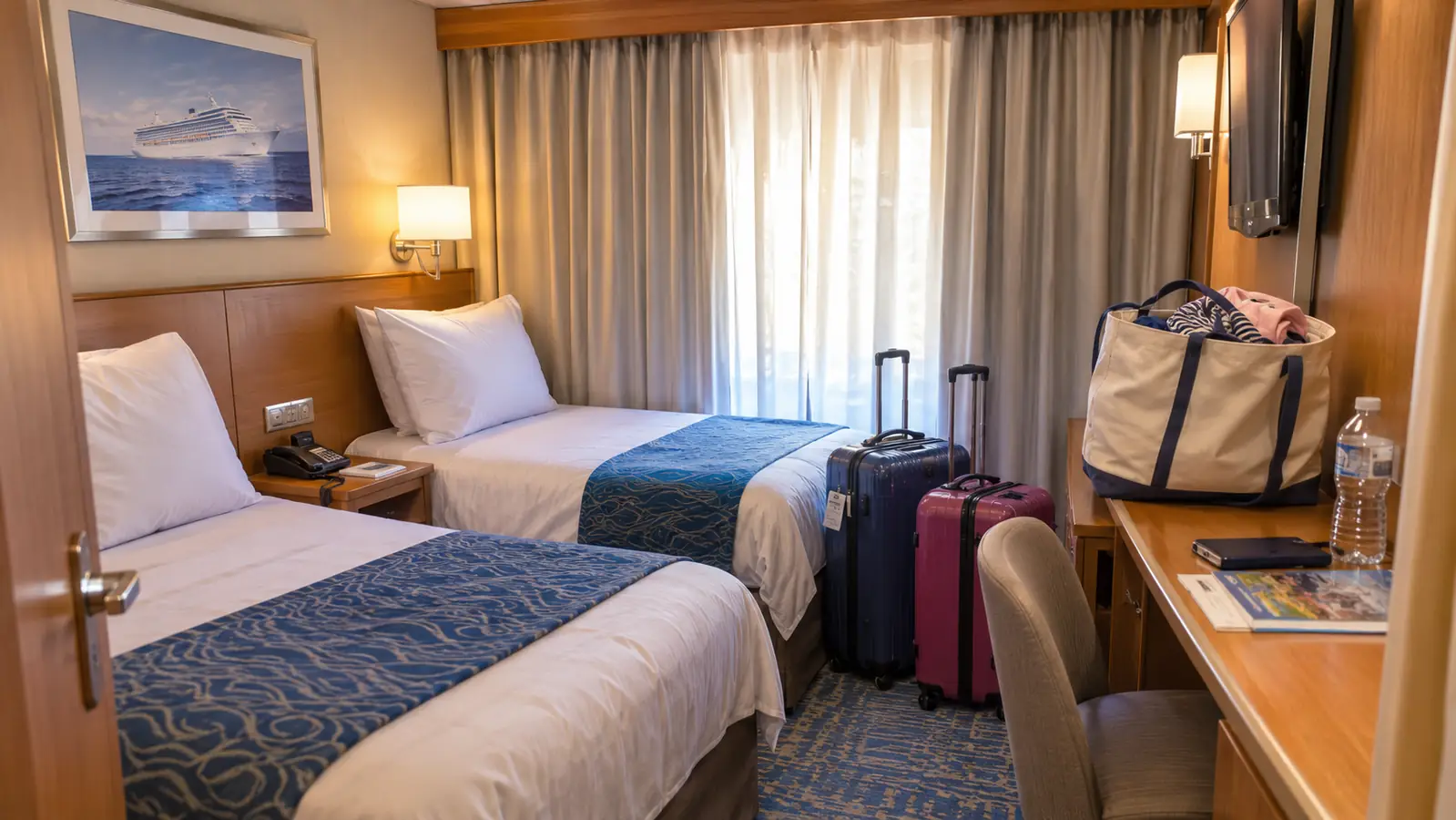
The first time Gus and I opened the door to an interior cabin, I laughed. Not because it was bad. Because I could not see where two medium suitcases, two carry-on bags, and two adults were supposed to fit. We had booked the cabin to save money, and we would do it again, but the room does not come with a spare closet. What it does come with is metal. The walls, the door, and often the ceiling will hold a magnet. That is why, before our ninth cruise, I bought a 10 pack of Neosmuk magnetic hooks and put them in a zip pouch in my checked suitcase. Six sailings later, that pouch is the first thing I unpack.
This is not a big project. It is a twenty-minute setup that saves you from living out of a suitcase for a week. The trick is not buying the strongest hook on the internet and hanging a steamer trunk from it. The trick is putting a few small hooks in the right places and keeping the weight honest. If you have ever tripped over a day bag in a cabin that is narrower than your hall closet, this is for you.
Ten hooks, one zip pouch, and a cabin that stops eating your stuff
The Neosmuk magnetic hooks are the ones we have used on six sailings. They stick to the metal wall by the door, hold a lanyard or a day bag, and come off on the last night without leaving a mark. We keep all ten in a zip pouch so they are packed before the suitcases come out.
Amazon Check the Neosmuk magnetic hooks on Amazon →The Five-Step Cabin Setup
Step 1: Pick hooks that are meant for metal, not for looks
A cruise cabin is not a kitchen. The surface you care about is a painted steel wall, and the hook has to hold through vibration, humidity, and the occasional slam of a bathroom door. The Neosmuk hooks are steel with a magnetic base and a powder-coated finish. The listing says 80 pounds of pulling force on steel. I do not test that with a suitcase. I test it with a lanyard, then a day bag, then a wet swimsuit, and I keep each hook to a few pounds.
The 10 pack matters more than it sounds. You are not going to use one hook. You are going to use two by the door, two in the bathroom, three on the wall, one by the bed, and you will want two spare. That is ten. A 4 pack leaves you moving things around all week. The hooks are small enough to live in a zip pouch and light enough that I forget they are in the suitcase until I need them.
One warning from experience: not every surface in the cabin is magnetic. The mirror is not. The window frame is not. The metal wall by the bathroom usually is, and the cabin door usually is. Put a hook on a surface that will not hold it and it will slide down the wall at 2 a.m. Test each spot with the hook empty before you hang anything on it.
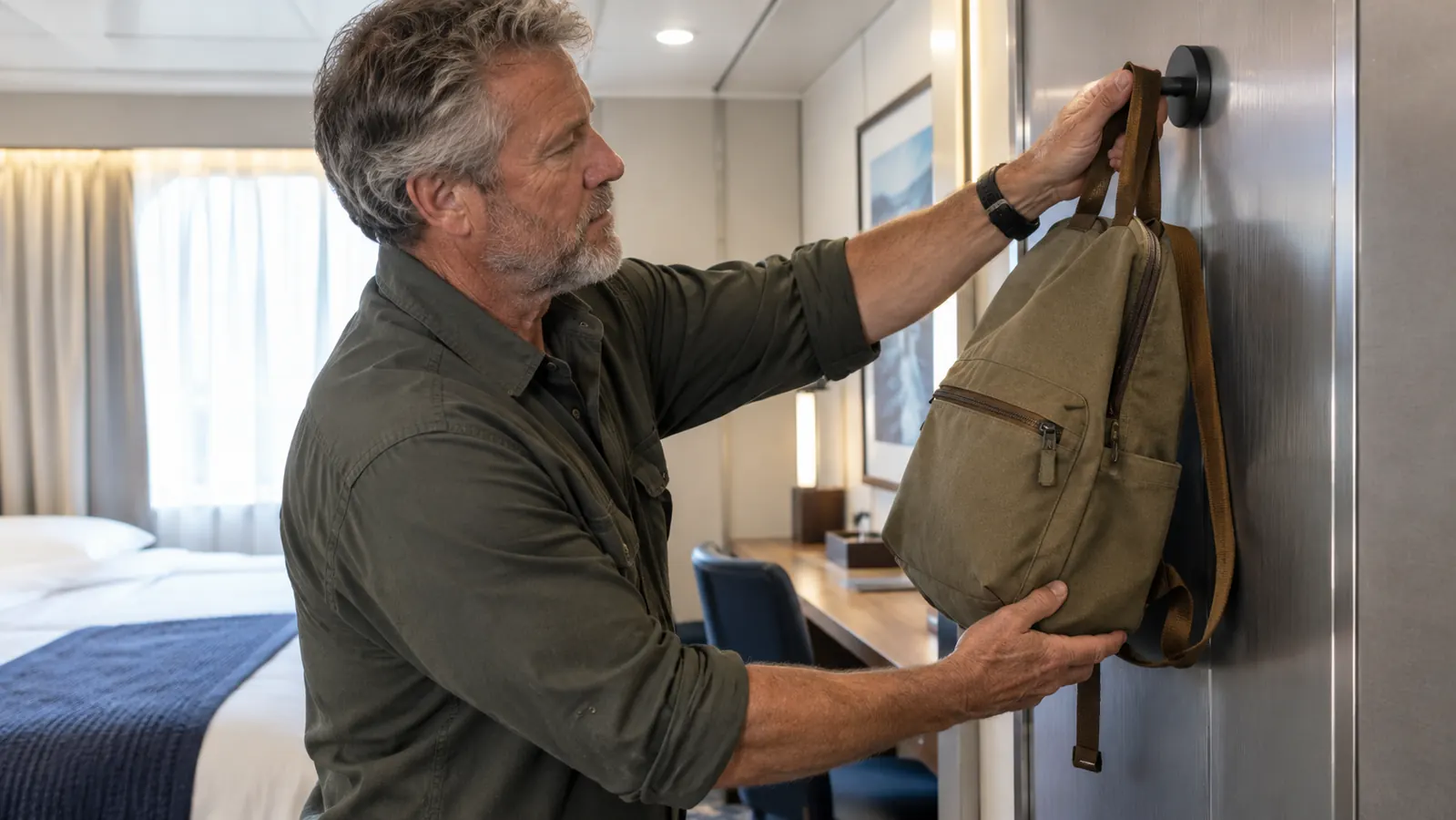
Step 2: Walk the cabin before you unpack
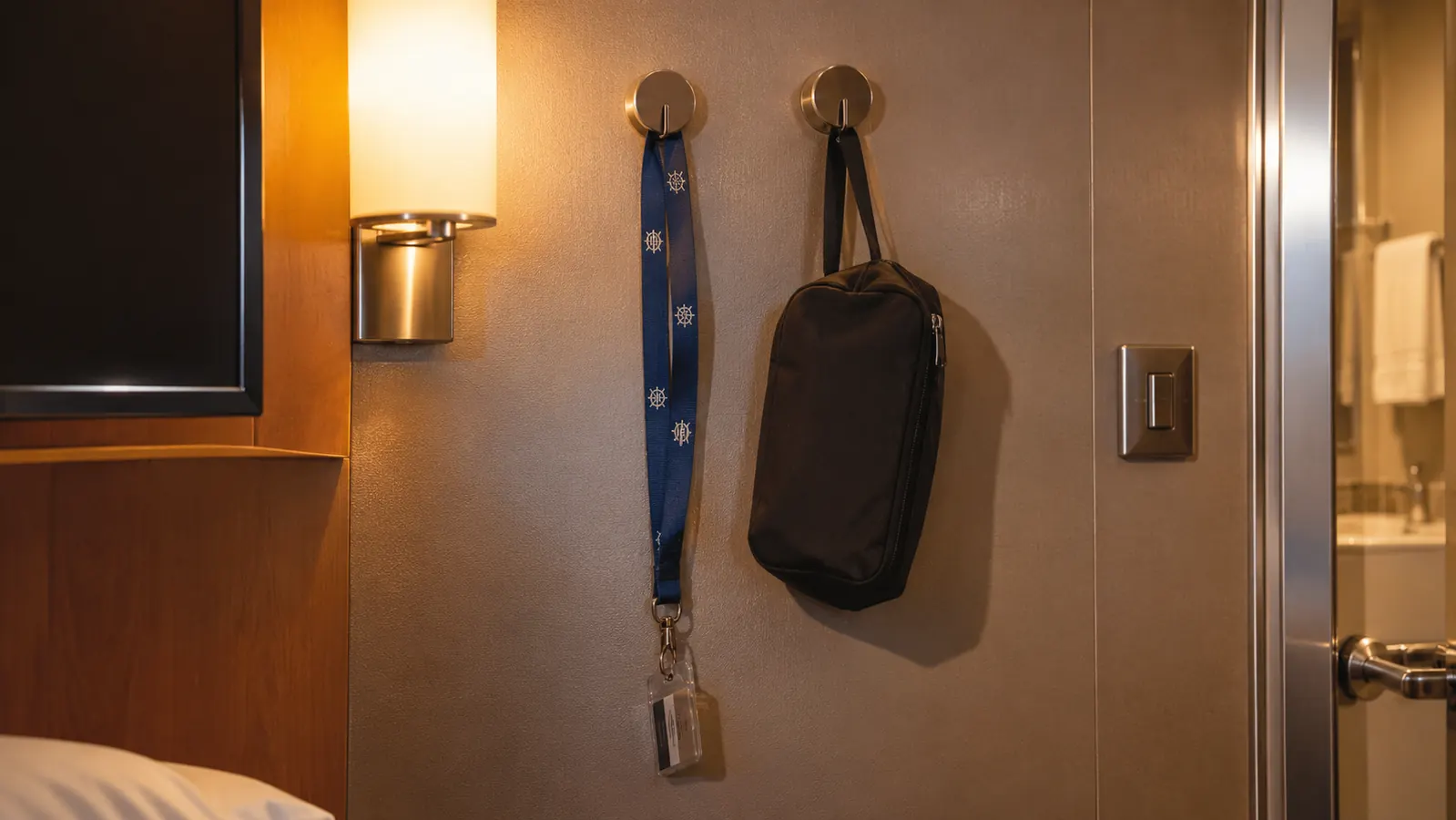
Before the suitcases come out, I walk the room with the pouch in my hand and decide where each hook goes. Gus thinks this is funny. Then he cannot find his jacket on the third night, and I point to the wall. The door gets two hooks. One holds our lanyards, the other holds hats. The bathroom gets two. One holds the toiletry bag, the other holds wet swimsuits. The long wall gets three. That is where the day bags go, and Gus's jacket. The bedside gets one for my glasses case. The last two stay in the pouch as spares.
This is the part people skip. They stick a hook somewhere random, hang a bag on it, and then wonder why the cabin still feels cluttered. The point is not to display the hooks. The point is to give every item that usually lands on the floor or the desk a home. Lanyards by the door mean you are not digging through a tote every morning. Wet swimsuits in the bathroom mean the carpet is not wet. Glasses by the bed mean you are not patting the nightstand in the dark.
If you are in an oceanview cabin, the wall under the window is often a good spot for a day bag, but check it first. If you are in an interior cabin, the wall opposite the beds is your best real estate. Do not put a hook over the bed unless you want to find out what a falling water bottle sounds like at 3 a.m. Cabin ceilings can hold hooks too, but I have never needed one. I would rather keep the hooks at eye level and easy to reach.
Six sailings, ten hooks, and every one of them came home in the same zip pouch. The count on the last night is the whole review.
Step 3: Hang in order of weight, not in order of panic
The first night is when people overload the hooks. You are tired, the cabin is small, and you hang the day bag, the camera bag, the jacket, and the souvenir tote on the same hook because it is the only one you can reach. Do not do that. Put the light things high and the heavier things low. A lanyard can go by the door at shoulder height. A day bag should go on a hook closer to the floor, or across two hooks if it is heavy. The 80-pound pulling force is a number on a package. Your cabin wall, the hook, and your back are all happier with less.
I use two hooks for Gus's jacket when it is wet. One hook holds the collar, the other holds the hem, and the jacket dries without turning the wall into a damp patch. I use one hook for my day bag and one for the tote. If the bag has a long strap, I loop the strap over the hook and let the bag rest against the wall. That keeps it from swinging when the ship moves. On a rough day, a bag that swings is a bag that makes noise all night.
The hooks are also useful for things you do not think about until they are in the way. A foldable hat. A small umbrella. The ship card on a lanyard. A pair of sunglasses. Gus's electric razor bag in the bathroom. None of these are heavy. All of them are the reason the desk looks like a yard sale by day three. A hook is not a closet, but it is a place to put one thing so the flat surfaces stay clear.
Step 4: Give wet things their own corner
The bathroom is where the hooks earn their keep. Cruise bathrooms are small, and there is never a good place for a wet swimsuit. I put one hook on the metal wall near the shower and one on the wall by the sink. The swimsuit goes on the first hook, the toiletry bag on the second. The swimsuit drips into the shower, not on the floor. The toiletry bag stays off the tiny counter. This sounds like a small thing until you have stepped out of a shower into a puddle because the suit was hanging on the door handle.
We have used the same two bathroom hooks on six sailings. The coating has held up, and I have not seen rust on them. That matters in a bathroom that stays damp for a week. I still dry the hooks with a towel on the last night before they go back in the pouch. It takes ten seconds. I would rather do that than find out in the suitcase that something stayed wet.
Do not hang a towel on a magnetic hook if the towel is heavy and wet. The hook will hold, but the towel will not dry well against the wall, and you will have a damp spot. Use the ship's towel bars for towels. Use the hooks for the small wet things that have nowhere else to go: swimsuits, rash guards, the little bag with the sunscreen. If you have a balcony, the chairs are better for towels on a sunny day, but do not leave anything out overnight.
Step 5: Make the last night a five-minute ritual
On the last night, after the suitcases are packed, I walk the cabin and count the hooks. Ten in, ten out. I peel each one off the wall with a firm pull, not a yank, and put it back in the zip pouch. I have never lost one. That is not luck. It is because the pouch has one job and the hooks go in it before I go to sleep. If you leave one on the wall, you will not see it until you are in the terminal, and then it is gone.
The other reason to do this on the last night is to check the walls. A magnetic hook can leave a faint ring if it has been in one spot for a week, especially on a painted surface. I wipe each spot with a damp washcloth and dry it. I have not had a mark that did not come off, but I also do not leave the hooks on for a back-to-back cruise. The cabin steward has enough to do without cleaning up after my organizing project.
The zip pouch goes in the checked suitcase, not the carry-on tote. That way I am not explaining a bag of hooks to security on the way home. I have carried them through embarkation security six times without a question, but I still keep them in the checked bag. The pouch is small, the hooks are steel, and the last thing I want is to hold up the line because I forgot what was in my tote.
What Else Helps
The hooks are the main event, but they do not fix everything. A non-surge power strip is the other thing we never sail without. Cabins usually have one or two outlets at the desk, and between two phones, my e-reader, and Gus's electric razor, that is not enough. We have carried ours on five sailings and it has gone through security every time. Do not plug a heating appliance into it. Irons and curling irons are banned on cruise ships, and a power strip does not change that.
Packing cubes are the second helper. We use an 8 set across both suitcases: Gus's clothes in his, mine in mine, one cube for swimwear, one for formal night. Unpacking into the tiny cabin drawers takes about ten minutes now. The cubes also keep the suitcase from becoming a pile of loose shirts by day two. Between the cubes and the hooks, the cabin has a place for clothes and a place for the things that are not clothes. That is most of the battle.
The smallest cabin upgrade is a ten-pack of hooks and a twenty-minute setup
We bought the Neosmuk 10 pack before our ninth cruise and have used the same set on six sailings. If you want the hooks that fit in a zip pouch, hold a day bag, and come home every time, start there. Then walk the cabin before you unpack.
Amazon See the Neosmuk magnetic hooks on Amazon →