
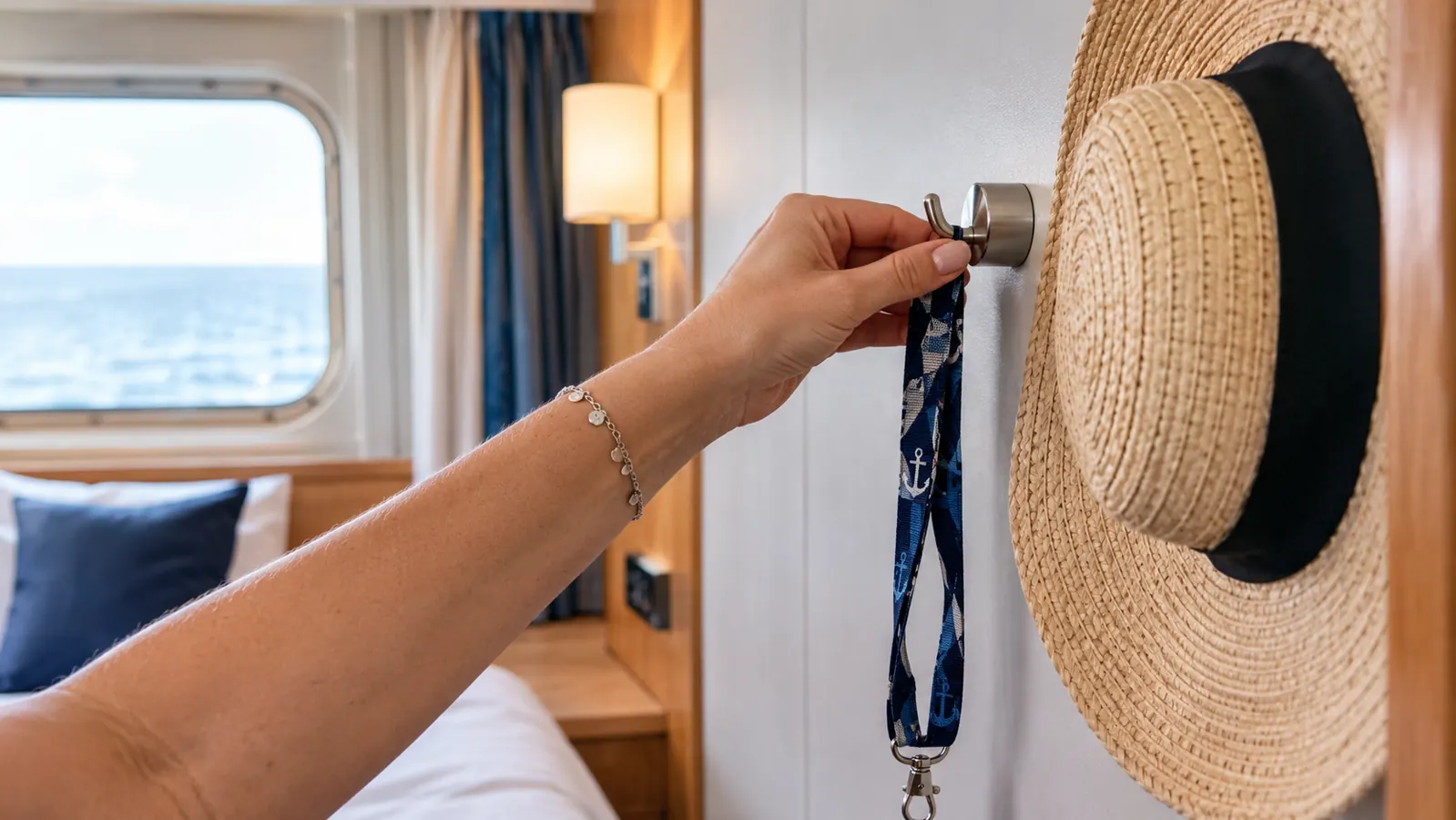
The first thing I do in a cruise cabin is not unpack. I walk the room and tap the walls with my knuckles, listening for the dull thud that means steel. Gus has watched me do this on six sailings now and he still asks what I am doing. I am working out where the Neosmuk magnetic hooks are going to live for the next seven days, and which walls are going to let me down.
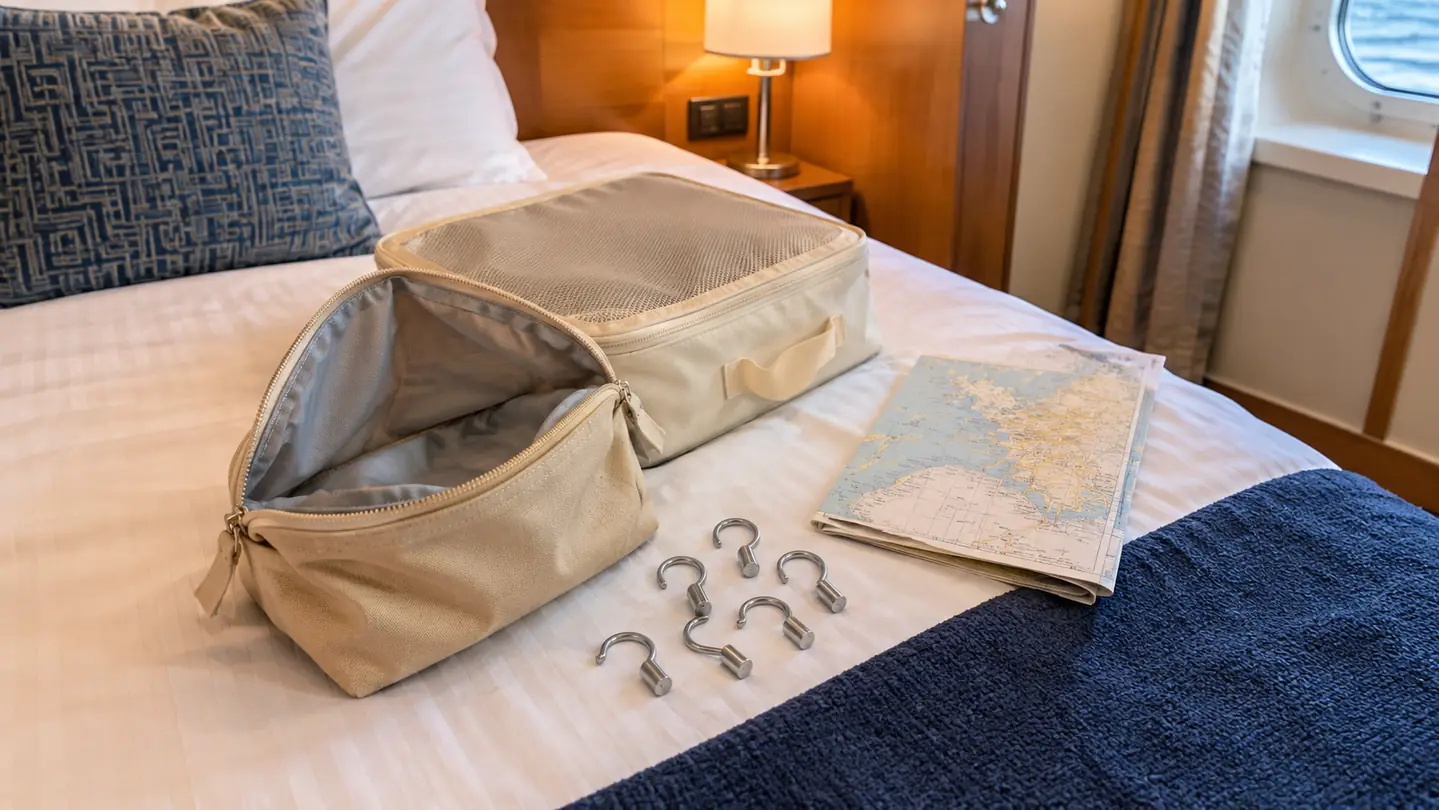
The hooks are a ten pack of small steel tube magnets, bought before our ninth cruise out of Port Canaveral. They have sailed with us on every trip since, cruises nine through fourteen, and all ten came home. I peel them off the walls on the last night and count them into the pouch. Ten in, ten out, six times running.
This is meant to be an honest review, though, not a thank you note. There are two numbers in that listing that disagree with each other, and the gap between them is where a first time buyer gets into trouble. I would rather explain it here than have you discover it at sea with a wet swimsuit on the floor.
The Quick Verdict
A genuinely useful cabin tool, as long as you plan around the six pound working limit and not the eighty pound headline.
Amazon Check Today's Price →Ten hooks, one pouch, six sailings, none lost
Small steel tube magnets that grip a cabin wall or ceiling without a tool, a mark, or a strip of adhesive.
Amazon Check Today's Price on Amazon →The Two Numbers That Do Not Agree
The listing leads with more than 80 pounds of pulling force under steel. Down in the specifications it recommends a maximum working weight of 6 pounds. Both numbers describe the same hook, and both are honest. They are just measuring two different things, and only one of them has anything to do with a cabin.
Eighty pounds is a pulling force. Picture a thick clean steel plate, a magnet flat against it, and a straight steady pull away from the surface. That is the test. In a cabin you will hang a lanyard, and the load will pull sideways and down, and there will be paint between the magnet and the metal, and the ship will be moving while you do it.
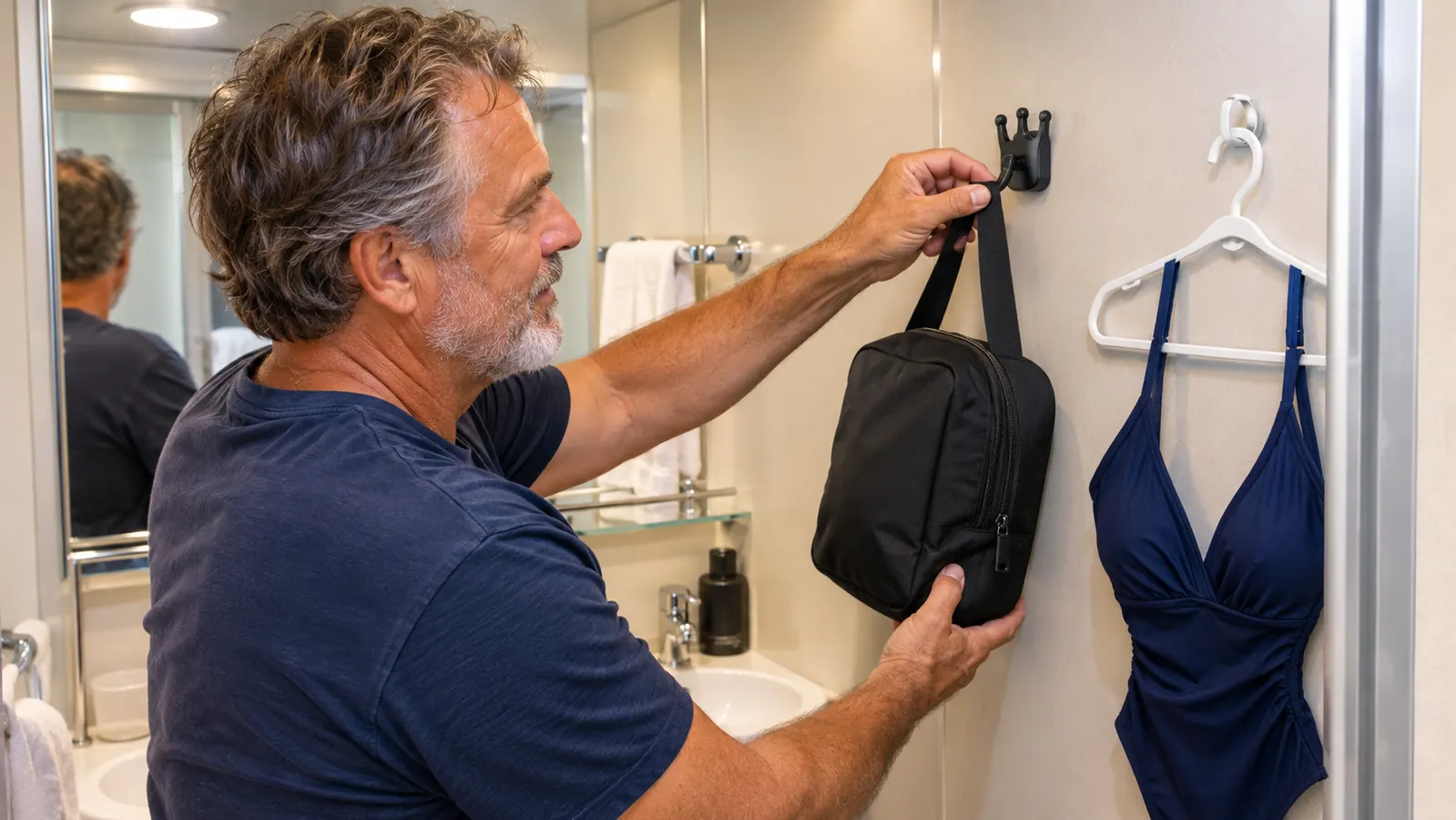
Six pounds is the number to plan around. A toiletry bag. A wet swimsuit on a plastic hanger. A day bag with a paperback and a phone in it. That is the range where these have never let go on me. Above it, the hook does not usually drop straight down, it slides, and a slide on a painted panel leaves a smudge you cannot wipe off with a thumb.
I have run my own version of that test more than once, and it is not a lab test. At home I hung a canvas tote with two full water bottles in it off the side of the refrigerator and watched what happened. It held, and then it slid, and then it dropped, and the whole thing took about a minute. That minute is the most useful thing I can tell you about buying these. At six pounds and under, on a clean flat panel, mine have never moved. Somewhere above that, the hook starts a slow walk down the wall and takes the paint with it.
The Tube Is the Part That Matters
What separates these from the flat disc magnets in the same aisle is the shape. The magnet sits inside a short steel cylinder, so the hook hangs off a rigid stem instead of a flat face. Neosmuk claims roughly fifty percent more force than the flat kind, and while I cannot verify the number, I can verify the behaviour. The flat magnets I tried held a lanyard and gave up on a wet swimsuit. These hold the swimsuit.
The cylinder also means the hook opening is small, which is a fair trade and a mild nuisance. A lanyard strap, a glasses case loop and a plastic hanger all sit in it comfortably. The wide padded handle on my tote does not. I hang that over two hooks spaced a hand apart, and it sits level instead of sagging to one side.
Six Sailings, Ten Hooks, One Pouch
We book an interior or an oceanview, whichever is cheaper that month, so the walls are the only storage we get beyond a closet the size of a phone booth. The layout has not changed since cruise nine. Two hooks by the door for lanyards and hats. Two in the bathroom, one for the toiletry bag and one for a wet swimsuit. Three along the long wall for day bags and Gus's jacket. One beside the bed for my glasses case. Two spare, still in the pouch.
The bathroom pair does the hardest work. Seven days in a small hot wet room is exactly the environment that turns a coated magnet orange at the edges. The listing says four layers of coating, nickel and copper and nickel again and then the finish. After six sailings the bathroom hooks look like the spares. I have not found a rust bloom on any of the ten.
The trip that settled it for me was a seven night Caribbean run with a proper sea day in the middle, the kind where the pool deck empties out by ten in the morning and the corridors smell of ginger. Gus spent that afternoon in the cabin with his wristbands on and the curtains shut, and I sat on the bed with a book and listened to the ship work. Three hooks were carrying his jacket, my day bag and a sun hat, and every one of them stayed where I put it through the whole roll. A flat disc magnet I had tried on an earlier ship would have been on the floor by lunch. That is the afternoon I stopped wondering whether the tube shape was worth paying attention to.
The hook beside the bed is the one I would replace first if it ever failed. Twenty years of school library work and I still take my glasses off in the dark and set them down somewhere I cannot see. A hook at shoulder height next to the pillow gives the case one home. I have not patted a nightstand at two in the morning since cruise nine.
Eighty pounds is a lab number on a clean steel plate. Six pounds is what the same listing recommends for a cabin wall. Plan around the second one and you will never pick a hook up off the floor.
What I Do Not Love About Them
They live in a zip pouch in my checked suitcase, and that is the one decision I would reverse. The suitcase reaches the cabin somewhere around mid afternoon on embarkation day. For the first few hours of every trip there are no hooks in the cabin, which is precisely when you want them, because that is when everything you own is in a pile on the bed and the desk has already disappeared.
The next thing is the size. Ten of these weigh about as much as a deck of cards and take up less room, which sounds like a compliment until you set one down on a nightstand and cannot find it again. The pouch solves that. Loose in a tote bag they will scatter, and a hook at the bottom of a tote bag is a hook you find on the last morning.
One small habit I had to learn, and it took two sailings: these magnets are not polite. Set one down on the desk while you are deciding where it goes and it will find the nearest steel and jump to it, and it lands with a click that sounds louder in a small room than it has any right to. Mine usually go for the bathroom door frame. I keep the pouch zipped now and take one out at a time. Gus does not. He tipped four of them onto the desk on cruise eleven and spent a full minute collecting them off the door frame and the closet hinge.
And the finish is a magnet, not a clamp. If you drag a bag sideways off the hook instead of lifting it, the hook walks a little. Do that on a painted panel and you will leave a mark on a wall that belongs to the ship. I lift, always. Gus does not always lift, and I have said something about it more than once.
Where They Will Not Work
Not every wall in a cabin is steel. Most are, and the ceiling usually is too, but on one of the newer ships we sailed the panel behind the sofa was not. I found out by tapping and hearing a flat sound instead of a thud, and I hung nothing there. If a wall refuses to hold one of these, the hook is not faulty. The wall is aluminum or a composite and no magnet on the market will help you.
That was the sailing where I learned to have a fallback. On the ship with the panel behind the sofa, I hung the day bag on the closet rod instead and kept my lanyard in the desk drawer, and it was fine, just slightly worse. Two hooks went up beside the bathroom door where the steel did run, and the other eight stayed in the pouch until we got home, which felt like a waste and was not one. A pouch of unused hooks weighs nothing and costs you no space. What costs you is assuming every surface in a cabin is magnetic because every surface on your last ship was.
Skip them for anything heavy and wet as well. A beach bag with two towels in it is over the working limit, and a towel that is soaked through is heavier than it looks when you pull it out of the pool. The hook will hold for a while and then it will let go sideways. That is a worse outcome than a clean fall, because the paint takes the damage and the cabin steward takes the blame.
Gus's Version of This Review
My husband is the reason I own an honest opinion about these instead of a fond one. Gus forgets things. He is the one who leaves a cap on a chair and a ship card in a pocket, and he is the one who told me, on cruise nine, that he did not need hooks on a wall, thank you, he would just use the desk. By night two the desk was a landfill and his jacket was on the floor.
He uses three of them now without being asked. Jacket on the long wall, cap above it, sunglasses looped on the one by the door. His only complaint is the size of the hook opening, which is the same complaint I have, and his other complaint is that I count them out loud on the last night. I will keep counting them out loud.
How They Compare With Adhesive Hooks
The obvious alternative is a stick on hook, and I understand why people buy them. They hold on any surface, including the panel behind the sofa that a magnet will not touch. The trouble is that they hold permanently. A cabin wall is not yours to redecorate, and at the end of the week you are either picking a residue patch off with your thumbnail or leaving it for somebody else to deal with.
The Neosmuk hooks lift off in a second, go back in the pouch, and travel to the next ship. That is the whole advantage, and it is worth more than it sounds on a wall you do not own. If you need something that will hold six pounds on a glass or a composite surface, a magnet is the wrong tool and you should buy the adhesive hook instead.
What I'd Tell a First-Timer
Buy the ten pack of Neosmuk hooks, not the four pack. Ten sounds like a lot until you lay them out. Two by the door, two in the bathroom, three on the long wall, one by the bed, and you are down to two spares on the first afternoon. The spares are the point. You will find a use for them by day three, usually a hat you are tired of setting down.
Put the pouch in the bag you carry on board, not the suitcase you check. I have done it the other way for six sailings, and I am telling you from experience that the few hours between boarding and luggage delivery are the hours you want a hook. And when you reach the cabin, tap the wall before you trust it. It takes ten seconds and it saves you a swimsuit on the floor.
What I Liked
- Grip a steel cabin wall or ceiling with no tool, no adhesive, and no mark left behind
- Ten hooks and a pouch take up about the space of a deck of cards in a suitcase
- Held a toiletry bag, a wet swimsuit, and a day bag for six straight sailings without a single fall
- The four layer coating survived repeated weeks in a hot, wet bathroom with no rust on any of the ten
- The steel tube design grips harder than the flat disc magnets I tried before these
- They lift off the wall in a second, so nothing is left for the cabin steward to scrape
Where It Falls Short
- The 80 pound headline is a lab figure. The listing's own working recommendation is 6 pounds
- One hook size only, and the opening is too small for a wide tote handle
- Small enough to misplace if you do not keep them in the pouch
- Nothing magnetic on some newer composite cabin panels
- Will slide, and mark the paint, if you drag a bag sideways instead of lifting it
- Packed in checked luggage, they reach the cabin hours after you do
Who This Is For
You will get real use out of these if you sail in an inside or oceanview cabin and you like having a place for everything. If you are the person who sets a lanyard on the desk on night one and hunts for it on night three, one hook by the door fixes that permanently. They suit anyone who dislikes the idea of adhesive on a wall they do not own, and anyone who has hung a swimsuit over a shower head and found it still damp at breakfast.
Who Should Skip It
Skip them if you want to hang a coat, a wet beach bag, or a backpack with a laptop in it. Six pounds is the working limit, and the person who ignores it is the person who writes a one star review about a hook that was asked to do a clamp's job. Skip them if you are on a ship with composite partitions and you are not willing to tap a wall first, and skip them if you would rather carry one large hook than ten small ones, because that is a different product and a fair preference.
And think twice before buying them as a gift for someone who has never cruised. Ten small steel cylinders in a pouch is a strange looking present. The person receiving it will not understand what it is for until they are standing in a cabin with a lanyard in one hand and no free surface in sight.
The hooks I tap cabin walls for, six sailings running
Ten steel tube magnets, one pouch, and a six pound working limit. That is the entire system, and it fits in the corner of a suitcase.
Amazon Check Today's Price on Amazon →