

Gus goes quiet about two hours out of Port Canaveral. He does not complain, which is worse. He just stops talking, sits very still, and stares at a point slightly above my left shoulder. I have watched it happen on eleven of our fourteen cruises. The Sea-Band wristbands were my idea after the fourth one, and they are the only thing in all those years that has changed how that first afternoon goes.
Before the bands, we worked through the usual list. We tried the patch, which left his mouth so dry he could not eat dinner. We tried the chewable tablets, which he could not keep down once the ship started moving. We tried ginger candy, which he now associates with feeling awful. We tried sitting on the promenade deck in cold air with a paper cup of ice, and that one works better than you would think, but only until you have to go back inside. The Sea-Band pair is the one thing he can put on before he feels bad and then leave alone for six hours.
The pair that lives in Gus's carry-on, not mine
Two wristbands, one pair, nothing to swallow. They go on the night before we sail and stay on until the water settles. If you get queasy on the first sea day, this is a low-stakes way to find out whether pressure works for you.
Amazon Check Today's Price on Amazon →You can put them on before the ship starts moving
This is the whole advantage. Most seasickness help is reactive. You take it after your stomach has already turned, and by then it is too late. Gus puts the Sea-Band pair on the night before embarkation, in the hotel room in Cocoa Beach, while he still feels fine. Then he sleeps, eats breakfast, and walks up the gangway with them already in place. Nothing about that first afternoon surprises him anymore. The timing costs nothing, and it is the single change that made them work for him.
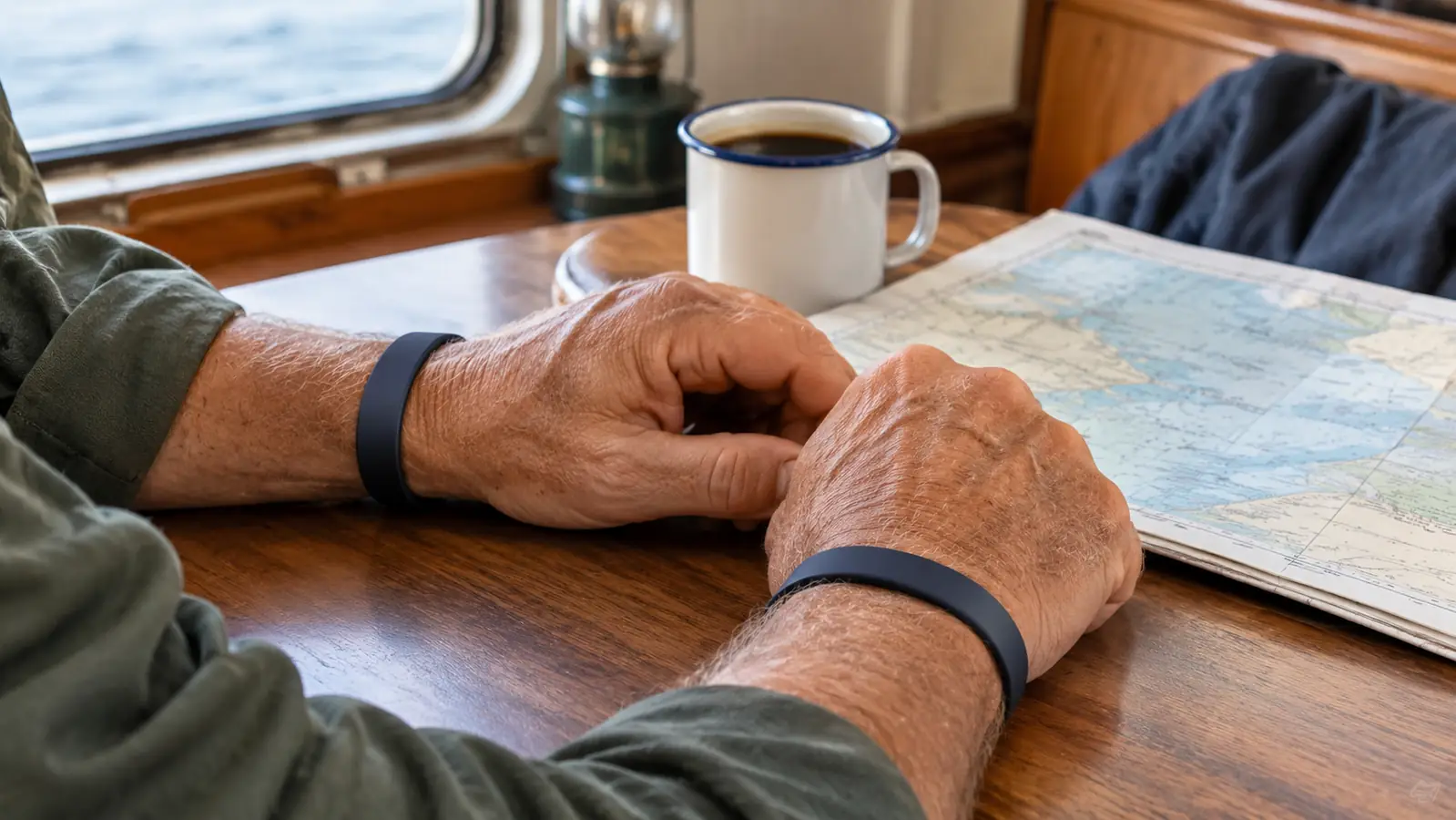
The pressure point is a fixed target, not a guess
The bands press on the P6 point on the inside of each wrist. That is the entire mechanism: pressure on a spot, no drug, nothing to swallow. I like this for a boring practical reason. There is no dose to remember, no half tablet, no standing in the cabin at eleven at night trying to recall whether you already took something. Gus slides them on, lines them up, and that is the end of the job. The Sea-Band pair he wore on cruise eight is the same pair going into the suitcase now.
There is nothing to swallow when your stomach is already turning
Swallowing a tablet while queasy is its own small torture. Gus has done it and he would rather sit in the corridor. Drug-free is not a marketing phrase in our cabin. It is the reason the bands get used at all. The patch and the tablets both involve something going into his system, and the dry mouth and the drowsiness are their own problem on a day you have paid for. He can also have a beer with dinner if he wants one, with nothing to time around a meal.
They stay put through a shower, a swim and a tender ride
Once they are on, they stay on. Gus wears them in the bathroom, out on the pool deck, and through a tender ride into Cozumel. The Sea-Band bands are washable, and we have rinsed them in the cabin sink more than once after a day of sunscreen and sea spray. They do not slide off when he pulls a t-shirt over his head, which was my original worry. Take them off before airport security, though. He forgot once and the agent had to look at them twice.
They pack flat and take up no room at all
Our habit is an interior or oceanview cabin to save money, so every square inch gets argued over. The bands go into the little zip pouch with his other small things and I do not think about them again until we are home. One pair is the whole kit. Two wristbands, nothing else to buy, no refills and nothing to charge. On a seven-night sailing he wears the same Sea-Band pair from the first afternoon to the last morning, and then it goes back in the pouch in the checked suitcase.
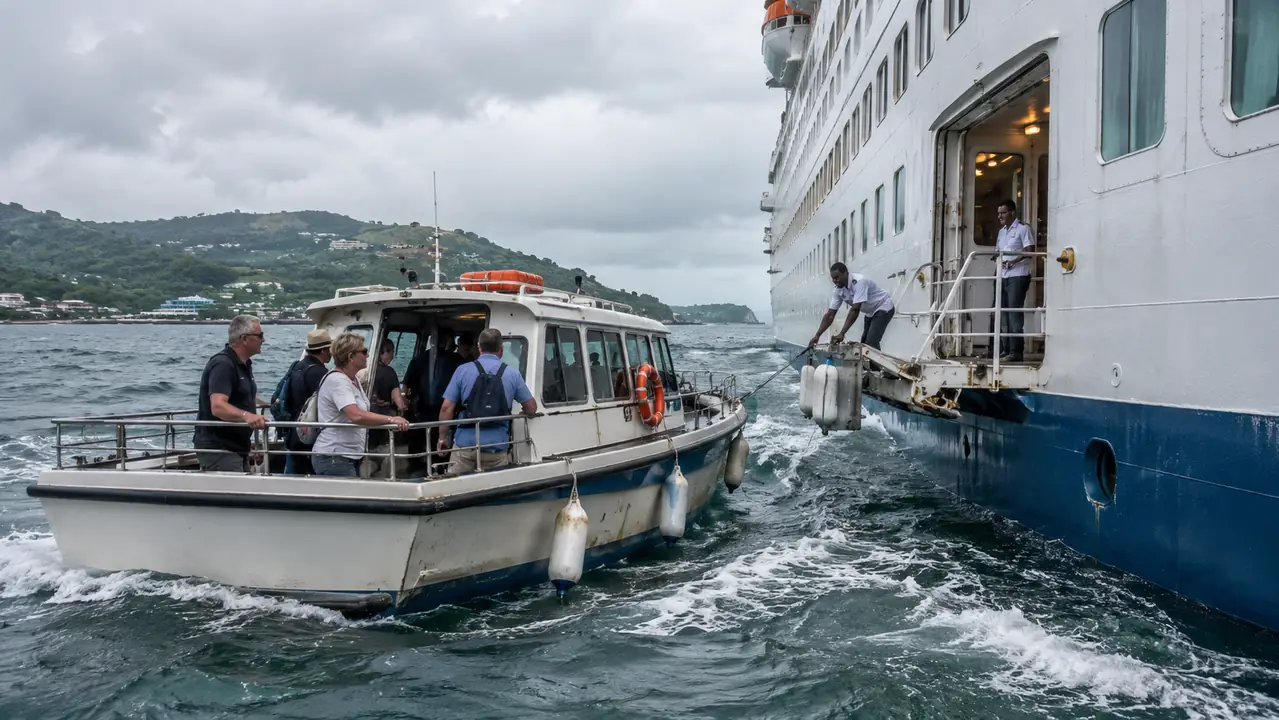
They work on land too, not just at sea
The first time Gus used them was not on a ship at all. It was the shuttle from the parking lot to the terminal, the one that takes the turns at Port Canaveral like it is being chased. He had them in his jacket pocket and put them on for the ride. Since then they have been on a tour bus in Alaska, a catamaran in the Mediterranean, and one memorable taxi in Barcelona. Same pair, same spot on the wrist. If your husband or your sister gets car sick, this is a cheap way to test the idea.
One pair covers the whole trip
There is no dose to count and no supply to run out. I do not have to look at the length of a sailing and do arithmetic on tablets. On a longer trip that matters, because a pharmacy in a foreign port is not where you want to spend an afternoon. The Sea-Band pair goes into the suitcase and comes home in the suitcase. That is the entire logistics of it. For a four-night Bahamas run or a seven-night eastern Caribbean route, the plan does not change.
They give him something to do about it
This sounds soft but it is not. Half of a bad first sea day is the helplessness, the lying down and waiting and feeling the ship move under you. Gus having a routine, bands on, jacket on, walk the promenade, find a chair somewhere with air, gives him an action instead of a sentence he has to endure. He is easier company. I get to enjoy the sea day instead of watching him. I will take that trade on every sailing we have left.
They come off the moment the water settles
This is the part nobody mentions. Bands on for the rough stretch, bands off when we reach the lee of an island and the decks go quiet. He can take them off in a second and put them back the same way. No half a tablet wearing off at a strange hour, no drowsy afternoon that was never needed. The pair sits in the cabin until the next open water stretch, and on a Caribbean route that may only be the first and last afternoons.
They are the lowest-stakes way to find out if pressure works for you
I am not going to tell you a Sea-Band pair will fix your stomach. I am telling you they helped Gus, across seven sailings, and that they are a small thing to try before you build an entire plan around them. If pressure does nothing for you, you have lost very little and you know something useful. If it works, you have a pair of bands that live in the suitcase. The listing also notes they are HSA and FSA approved, which surprised me, though it is worth checking against your own plan.
What I'd Skip
I would skip the chewable tablets if you are already queasy, skip the patch if dry mouth ruins your day, and skip anything that has to be taken at a set hour while you are out on a tender. I would also skip the idea that any of this replaces a conversation with your doctor or pharmacist. Gus finds the Sea-Band bands help him. That is one man's experience on seven sailings, not a medical claim, and if you get genuinely sick on the water you should ask about medication before you sail rather than after. What I would not skip is putting them on the night before the ship moves. If you want the longer version of how this pair has held up, my long-term notes cover seven sailings, and I put them side by side with the patch in a separate piece.
He puts the Sea-Band pair on in the hotel room the night before, while he still feels fine. That timing is the whole trick.
Put them on the night before, not the morning after
One pair, no pills, nothing to count and nothing to charge. Gus has worn the same Sea-Band pair from cruise eight to cruise fourteen, and it still goes into the pouch before every sailing. Check the current price and read the reviews from people who wore them on the water, not just in a car.
Amazon Check Today's Price on Amazon →