

Gus put the Sea-Band wristbands on the night before our eighth cruise out of Port Canaveral, mostly to humor me. He is 64, he spent thirty years in other people's attics and crawlspaces, and he does not take well to being fussed over. So I did not push it. I left the package open on his side of the bed and went to sleep. Two days later, somewhere between Nassau and the turn back toward Florida, the ship started doing the thing where the hangers slide in the closet and the dining room empties out by the second course. Gus was still at the table. He ate. On a rough night, that had not happened in years.
So let me be straight with you, because I have read enough reviews to know when somebody is overselling. These bands are not medicine. They are not a cure. If seasickness is a genuine medical problem for you, or if you are pregnant, or if you already take prescription medication, the right move is a conversation with your doctor or the ship's pharmacist, not a piece of elastic from an online listing. What I can tell you is what happened in our cabin across seven sailings, on flat days and on the kind of night where you eat dinner holding the table.
The Quick Verdict
Not a cure and not a replacement for medication. But seven sailings of watching Gus eat dinner on nights the dining room was half empty made these the cheapest insurance in our suitcase. The fit takes getting used to, and they will not save everybody.
Amazon Check Today's Price →Seven sailings, one small pair, and a husband who finally ate dinner
Reusable, washable, drug free, and light enough that you forget it is in the bag until the water gets choppy. Current price and stock are on the listing.
Amazon Check Today's Price on Amazon →How I've Used It
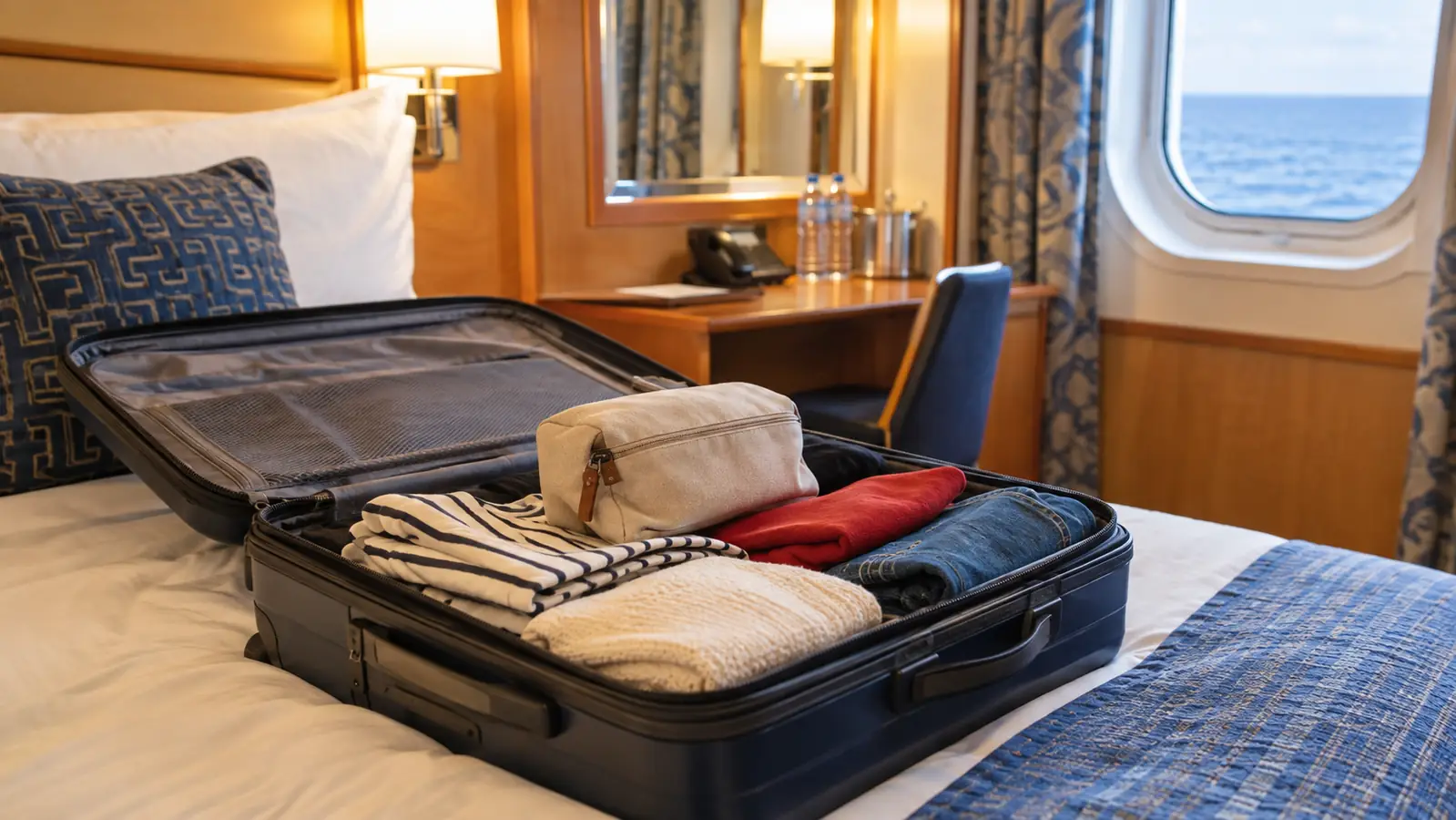
We are not adventurous packers. We book interior or oceanview cabins to keep the cost down, one medium checked spinner each, plus my carry-on tote for embarkation day. Space is tight and I am ruthless about what earns a place. The Sea-Band pair lives in the top zip pocket of Gus's suitcase, in a little pouch, and it comes out the night before we leave the dock. That is the routine. It has not changed since 2019. The year we bought them, I had already spent three trips watching him push food around a plate and give up, so the pouch went into the top pocket and stayed there. Now I check it on the last night before we zip the suitcases, the same way I check for the phone chargers and my reading glasses. Ten seconds, both bands accounted for, done.
Fourteen cruises since 2009, mostly four and seven night Caribbean runs out of Port Canaveral, plus Alaska out of Seattle in 2019 and the Mediterranean out of Barcelona in 2023. Gus has worn the bands on seven of those, cruises eight through fourteen. I have never worn them, because I am one of those obnoxious people who does not get seasick. So everything below is secondhand in the most literal sense. I watched.
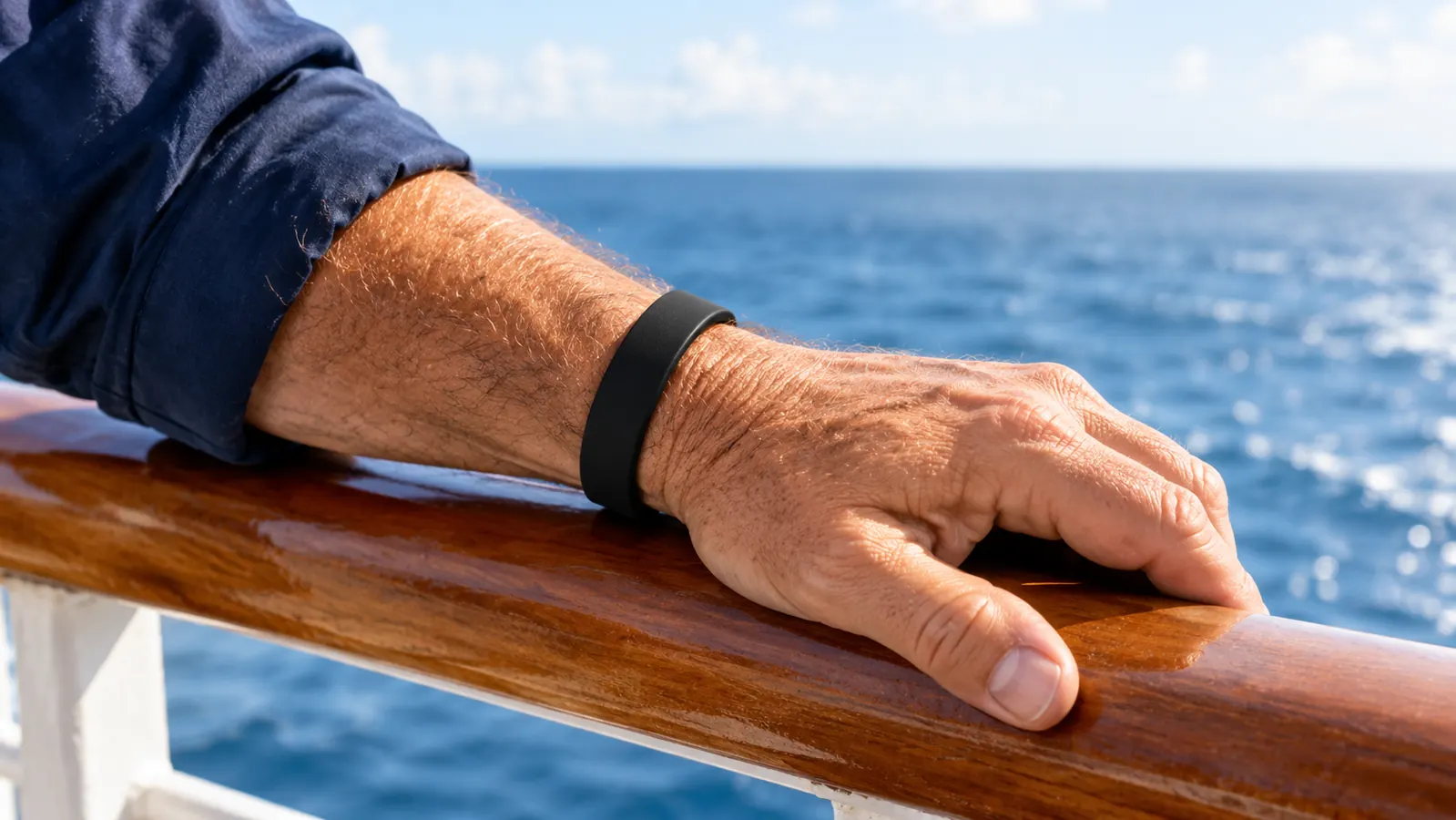
What I noticed first is how unremarkable they are. Two knitted bands with a plastic stud that presses into the inside of each wrist. One ounce total, small enough to disappear in a pocket. No battery, no refill, no schedule. He puts them on, takes them off to shower, rinses them in the sink and lets them dry on the towel rail. Seven sailings in and they look about the same as the day they arrived, which is the entire reason I stopped buying the patches.
What the Band Actually Does, and What It Does Not
The idea is acupressure. Sea-Band puts a stud against the P6 point on the inside of each wrist, roughly three finger widths up from the crease, and the pressure is meant to dull the nausea signal. It is drug free, which matters to us, because Gus already takes blood pressure medication and I am not layering things on top of that without a professional telling me to. No drowsiness, no dry mouth, no wondering whether he can have a beer with dinner.
What it does not do is stop nausea that has already arrived. I want you to hear that clearly. On our eleventh cruise, a windy sea day out of Cozumel, Gus took the bands off for a shower and put them back on twenty minutes late. He spent the next two hours on the bed with the curtain drawn. Once his stomach had turned, the bands did nothing to turn it back. They work on the front end, worn before the water gets bad.
I also want to be honest about the evidence. Acupressure for nausea has been studied, and the studies do not agree with each other in any way that would let me promise you it works for everyone. Some people get real relief. Some get nothing. Gus gets relief, and after seven sailings I have stopped expecting a different result. Your experience could match his on a bad day or your neighbor's on a good one.
One more thing and then I will get off the soapbox. If Gus's seasickness were severe, if he were vomiting or dizzy or unable to function, I would have him at the medical desk on deck two and I would follow whatever they told us. The bands are a small helpful thing. They are not a plan for a serious problem.
The Fit Problem Nobody Warns You About
These come in one size, one pair per package, listed at three quarters of an inch by two and a half by five and a quarter, one ounce. That is a small band. Gus has forearms like a man who spent a career carrying things up ladders, and the first afternoon he complained it was too tight and left a mark. He stretched it over the back of a chair for a night and it relaxed. By the second sailing he had it settled where he wanted it and stopped mentioning it entirely.
The flip side is thin wrists. Mine are narrow, and when I tried one on out of curiosity it slid until I pushed it further up my arm. There is no adjustment beyond the elastic itself. If you land between sizes, expect a couple of days of fiddling before you find the spot where the stud sits on the P6 point and stays put. That is not a defect exactly. It is the nature of a one size band.
I measured my own wrist at just under six inches, and the band had room to travel. On the second morning of a sailing I found it halfway up my forearm after a shower, having crept there overnight. If you are shopping for a small wrist, know that going in and check the position after every shower, because it will not announce that it has moved.
Once his stomach had turned, the bands did nothing to turn it back. They work on the front end, before the water gets bad. That is the whole trick, and nobody puts it on the package.
Seven Sailings, and the Nights I Remember
The Alaska run out of Seattle in 2019 was the trip that made me a believer, and not because of any dramatic storm. It was the quiet rolling, the kind that goes on for hours and wears a person down. Gus wore the bands from the night before embarkation straight through the inside passage and ate every meal. I remember a breakfast where the coffee was tilting in the cup and he was talking about a floatplane he had seen from the promenade. That is the whole review, really. Four days of it, mostly flat water and low cloud, and he never once went back to the cabin in the afternoon. On the second morning I sat across from him in the buffet with a plate I did not want and watched him finish a full breakfast and go back for more toast. I still think about that toast.
The Mediterranean out of Barcelona in 2023 was the opposite test. Almost flat all week, and the bands sat in the pouch unused until the final sea day, when the ship crossed a stretch between ports and the pool deck cleared out in ten minutes. He put them on, sat through the show, and had a late snack. Whether the bands did that or the sea simply calmed, I cannot prove. I have learned to stop needing to prove it.
In between there were Caribbean sailings where nothing happened at all, and those are worth mentioning too. Nothing happened because nothing needed to. He wore them anyway on the rough days, and we never once had to leave a dining room mid-course. Seven sailings, and the pattern is dull and consistent, which is exactly what I want from anything in my suitcase.
How Gus Wears Them, Exactly
The night before embarkation, at home in Melbourne, before we leave for the port. Both wrists. He checks that the stud sits on the soft spot inside the wrist and not on the bone. Then they stay on through the drive to the terminal, the check-in line, the muster drill. He takes them off to shower and puts them back on right after. On a calm day he might forget them until dinner.
Cleaning is a rinse in the bathroom sink with a drop of hand soap and a towel dry. That is it. No spare parts to lose, nothing to recharge, nothing that expires. Seven sailings of stretching and rinsing and the elastic has not gone slack, which surprises me every time I check it. Compare that to the patch he used to wear behind his ear, which left a sticky residue and made him drowsy enough that he napped through an entire afternoon in Nassau. I am not saying the patch does not work. I am saying he stopped asking for it.
One practical note from the woman who packs for two. Put them somewhere you will see them on the last night, not buried at the bottom of a packing cube. We unpack into those tiny cabin drawers within ten minutes of arriving, and small things vanish in there. The zip pouch in the top pocket of his suitcase is the only reason we have never left a band behind in a cabin.
What I Liked
- Reusable and washable, seven sailings on one pair and they still look new
- Drug free with no drowsiness, so nothing clashes with Gus's blood pressure medication
- One ounce total, so it disappears into a suitcase pocket and never counts against a luggage limit
- No batteries, refills or expiry dates, which means nothing to forget on the last morning
- HSA and FSA eligible, which is more than most of the gadget pile in my carry-on can say
Where It Falls Short
- One size only, and Gus needed a few days before the fit stopped bothering him
- Does nothing once nausea has already started, the mistake we made on our eleventh cruise
- No adjustment beyond the elastic, so a narrow wrist will slide until you find the right spot
- It is not a medication and will not work for everybody, and the research is genuinely mixed
- Small enough to be lost in a cabin drawer if you do not park it in a pouch
What We Tried Before This
The patch came first, years ago, and it worked well enough that Gus kept using it until he did not. The problem was the aftermath. Drowsy afternoons, a dry mouth, and a sticky patch of skin behind his ear that he picked at for days. He also did not love the idea of adding another drug on top of the ones he already takes every morning. That is a personal preference, not a medical opinion, and I want to be clear about the difference.
Then came the ginger chews, which he still keeps in the suitcase and still eats, mostly because he likes them. Then a pair of elastic bands from a shop on board, which is how we found Sea-Band in the first place, though I later ordered the same pair online for the next trip. The chews and the bands live side by side now. One is a snack. The other is the thing that goes on the night before we leave the dock. I would not want to sail without either, and I would not want to sail with only the chews. That first pair from the ship shop cost more than I care to admit and came in a plastic clamshell that fought me for five minutes with a pair of nail scissors. That is why the next pair came from an order I placed at our kitchen table in Melbourne, months ahead, with time to spare.
Who This Is For
This is for the person who gets queasy on a boat but does not want to be medicated for a week, or who already takes something daily and does not want to stack another pill on top without asking a pharmacist first. It suits a traveler who plans far enough ahead to put the bands on the night before, because the whole point is getting ahead of the motion. If you are the packer in the family and you are shopping for someone like my Gus, this is a small thing that costs little and occasionally saves an entire evening.
Who Should Skip It
Skip it if your motion sickness is serious. If you have ever spent a cruise in the cabin, if you vomit, if you cannot function on a rough day, talk to a doctor before you sail and get something that actually treats it. Skip it if you want something you can slap on after you already feel awful, because that is not what this does. And skip it if you need certainty before you spend, because the honest answer is that the research is mixed and the only real test is your own wrist.
The pair that has been in Gus's suitcase since cruise eight
For the traveler who gets queasy and would rather not take a pill for it. Reusable, washable, drug free, one pair per package. Current price and sizing details are on the listing.
Amazon Check Today's Price on Amazon →