
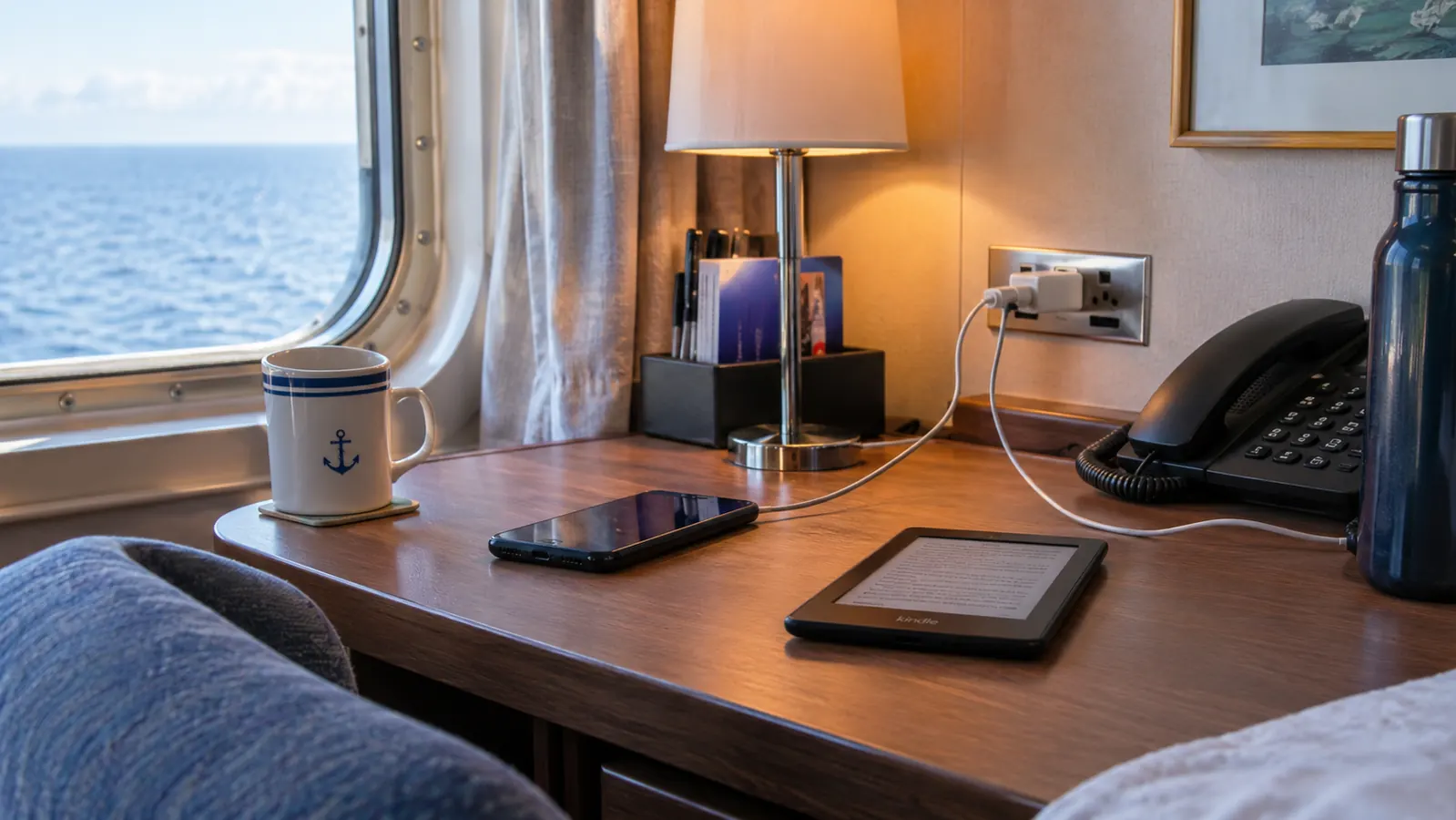
The desk in an interior cabin is roughly the size of a dictionary. Mine held a lamp, a phone, a small tray of papers and one outlet. Gus's razor wanted that outlet. My phone wanted it. His phone wanted it. So did my e-reader. There is a version of that week where I spent twenty minutes every night on my knees under the desk, unplugging a lamp so that somebody's phone could charge.
The first fix we tried was a power strip from the garage, the heavy kind with a surge protector built in. It never made it to the cabin. Security pulled it out of the bag at embarkation, looked at it and handed it back with a form. Surge protectors are exactly what they are checking for. So before our tenth cruise we bought a Cruise On non-surge power strip, the small one with two USB ports and three AC outlets, and it has gone through embarkation security without a word on every sailing since.
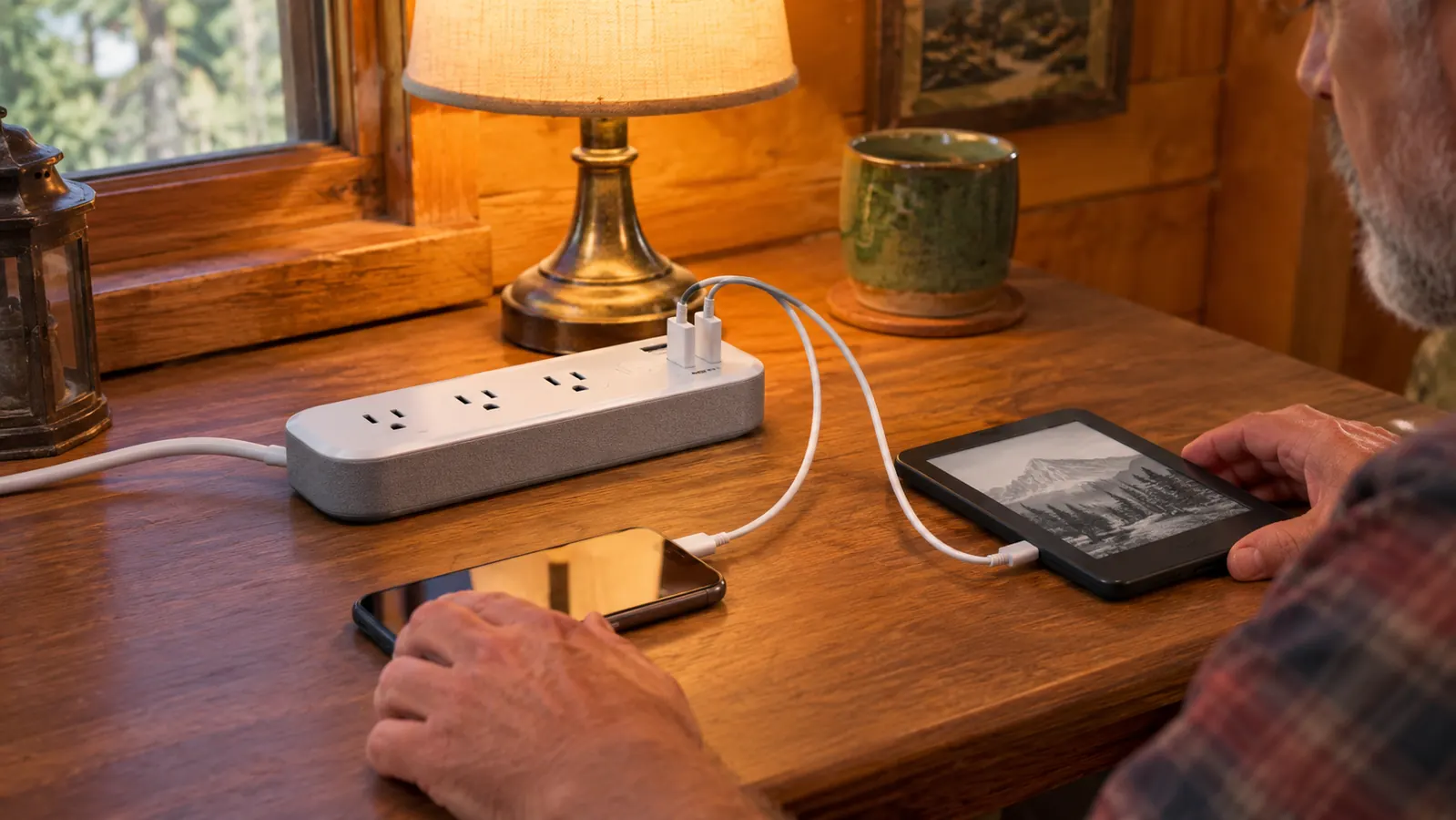
Here is what it actually did for us. The Cruise On strip sits on the desk by the lamp. Two phones, my e-reader and Gus's razor all plug in at once and stay plugged in overnight. That is four devices on a strip that will take five, and it means we stopped negotiating. Nobody has to unplug anything to charge anything else. The lamp stays lit. It is a small, dull improvement to a vacation, and I would not sail without it now.
Gus charges his razor on the desk, never in the bathroom, and that is on purpose. A cabin bathroom is damp and the counter is the size of a saucer. The desk has room. The strip weighs five ounces and measures about three and a half inches by three, so it takes less space than the paperback I bring and never finish.
One rule we follow and you should too. Do not plug a heating appliance into it. Irons, curling irons, anything that gets hot, the cruise lines ban them in cabins and the Cruise On strip is not the workaround. It is for electronics: phones, tablets, cameras, a laptop, a speaker, a razor. That is the whole job.
It weighs five ounces, it takes up less desk space than a paperback, and it has cleared embarkation security on five sailings without anyone looking at it twice.
One Desk Outlet, Four Devices, No More Negotiating
This is the strip that lives on our cabin desk: non-surge, two USB ports and three AC outlets, five ounces, no cord to tangle. It has gone through embarkation security on five sailings without a question.
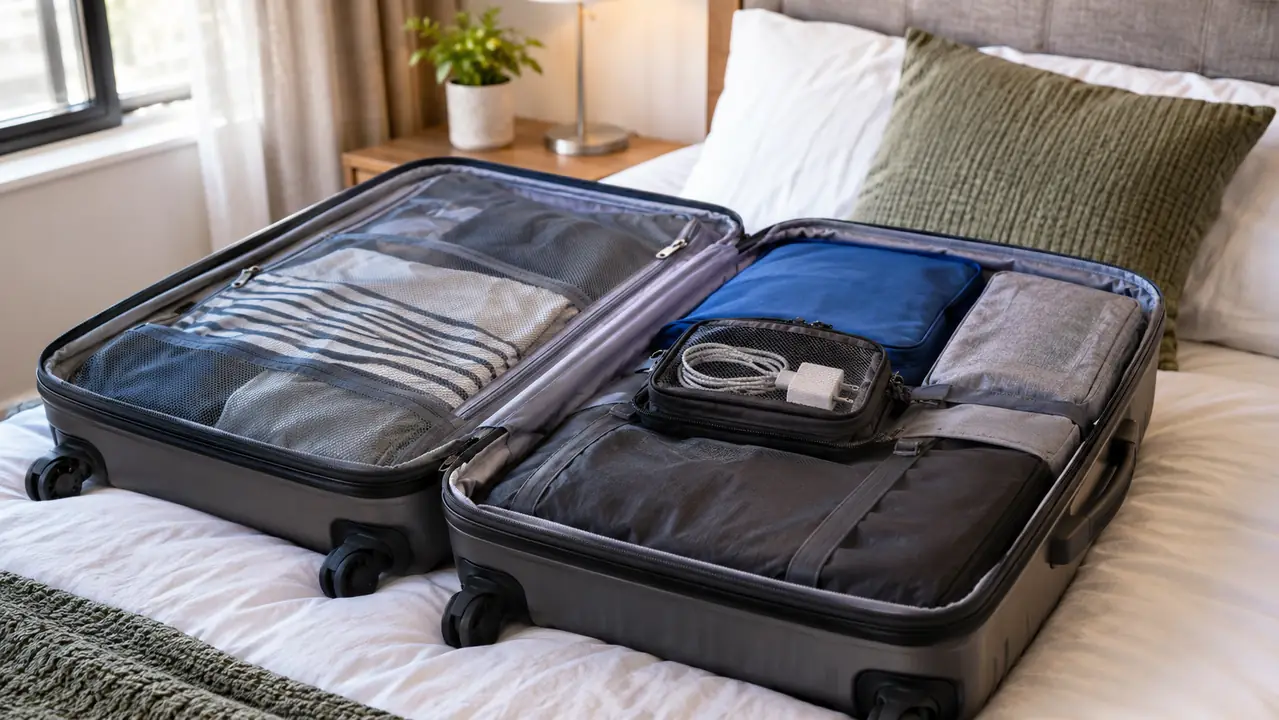
Amazon Check Today's Price on Amazon →The thing I did not expect to care about is how it packs. It goes in the outside pocket of my checked suitcase with the cables wrapped around it, and I have never once had to dig for it at security, because it never gets flagged. Five sailings, five times through the x-ray machine, no conversation.
The two USB ports are the part that quietly matters. They are on the strip itself, so the phone cables go straight in without a charging brick. We bring two bricks for the AC outlets and even then we usually do not need them. Between the two of us we have four things that need charging every night and one desk outlet to do it with.
What it is not. It has no extension cord, so the reach is short, and if your cabin's only outlet is behind the bed rather than at the desk, this will not help you from across the room. It also is not a voltage converter. The Cruise On strip is a 125 volt unit, which is what a North American cabin outlet gives you, and if you are sailing somewhere the outlets are different, that is a separate problem with a separate answer.
I bought one. I have never wished I had bought two. The desk is not big enough for a second strip to make sense, and everything we own that needs charging fits on the first one.
People ask why a surge protector is a problem when a plain strip is not. I am not an electrician and I am not going to pretend to be one. What I know is what happened at the security table, twice, before we switched. The lines publish what they allow and they are consistent about it. Non-surge, no cord, and it goes through.
We book interior cabins to save money, which means the desk is also the shelf, the charging station and the place where the daily newsletter ends up. A strip that takes three inches of it is the right size for that room. A long strip with a cord would have been in the way every day of the trip.
We have used it on five sailings now, cruises ten through fourteen. The last-night routine has not changed: unplug everything, wrap the cables, put the strip back in the outside pocket, and count the magnetic hooks on the wall so we do not leave one behind.
What I'd Tell You If We Were Sitting at My Kitchen Table
I would tell you the outlet problem is real and that most people solve it wrong. They bring the strip from the garage and lose it at security. Or they buy a converter they do not need. Or they spend the week playing musical chairs with two cables and one plug.
What you want is small, non-surge, no cord, and enough outlets for the two of you. The Cruise On strip has three AC and two USB, and that has been enough for four devices every night for five cruises. Put it on the desk when you unpack, plug the lamp back in, and leave it there until the last morning.
And if you travel with someone who forgets things, which I do, buy the one that lives in the suitcase pocket and never comes out at home. The reason ours works is that it is always packed. It has never been left on the kitchen counter, because it has never had a reason to be there.
The Small Thing That Earns Its Spot in the Suitcase
Two USB ports, three AC outlets, five ounces, and no cord to fight with. If your cabin has one desk outlet and two people charging, this is the fix.
Amazon See the Cruise On Power Strip on Amazon →