

The first phone I nearly drowned on a cruise was not in the ocean. It was in the bathroom sink of an oceanview cabin, and I stood there with my hand hovering over the water trying to work out whether the drop had already done damage. That was cruise nine. By cruise eleven I had bought two JOTO waterproof phone pouches, one for me and one for Gus, and mine has gone on every sailing since. Four cruises now. Cozumel, Costa Maya, Nassau, and a long wet afternoon on the pool deck during a sea day. The phone still turns on.
Before the pouch, I did what most people do. I put the phone in a sandwich bag, which fogged up and gave out at the zip by mid afternoon. Or I left it in the cabin and spent the day walking back to check the time. Or I trusted the phone's own water rating, which is built for a splash at the sink and not for a snorkel vest pocket. The JOTO pouch is the boring answer that actually held up. This is what four sailings taught me about it, including the two things that still annoy me.
The Quick Verdict
Four sailings, one snorkel boat, zero water inside. The snap and lock seal and the neck strap are the whole product and both do their job. Unlocking through the plastic takes a little patience.
Amazon Check Today's Price →The pouch that came back dry from Cozumel every time
Two of these went in the tote before our eleventh cruise and they have ridden along on four sailings since. If you buy one piece of water protection for a Caribbean itinerary, make it a sealed pouch and not a bag from the kitchen drawer.
Amazon Check Today's Price on Amazon →How I've Used It
We sail out of Port Canaveral, usually four to seven nights, and we book an interior or oceanview cabin to keep the cost down. That means space is tight and nothing lives on a counter for long. The pouches live in the top pocket of my carry-on tote between trips, flat, with the neck straps coiled around them. On the ship they hang on a magnetic hook by the cabin door, which is where the lanyard stays when I am not wearing it.
The routine before every trip is the same and takes two minutes. I fold a paper towel into the pouch, snap the top closed, and hold it under the sink tap for a slow count of thirty. Then I dry the outside, open it, and check the paper. In four cruises it has come out dry every time. I do this because the seal is the only part of the product that can fail, and I would rather find out in my own bathroom than on a snorkel boat three miles off Cozumel.
On board, the pouch goes around my neck on the lanyard whenever we leave the cabin. Pool deck, buffet, the walk down the pier at Costa Maya in the rain, all of it. Gus keeps his in his pocket until we get near water and then puts it on, which is a habit I have not been able to break and which has cost us nothing. Mine has been in the shallow end of the pool, in the ocean off Cozumel on a snorkel excursion, and once, accidentally, at the bottom of a beach bag with a wet swimsuit sitting on top of it. Nothing got in.
The one thing I did not expect was how it changed my packing. Before, I carried the phone in a zipped pocket of the tote and worried about it. Now it lives in the pouch and the pouch lives on a hook. On a ship where the whole cabin is one desk and a closet, having a fixed spot for a small expensive object is worth more than the pouch itself costs. We pack two medium spinners and my tote, and the two pouches together take up less room than a paperback.
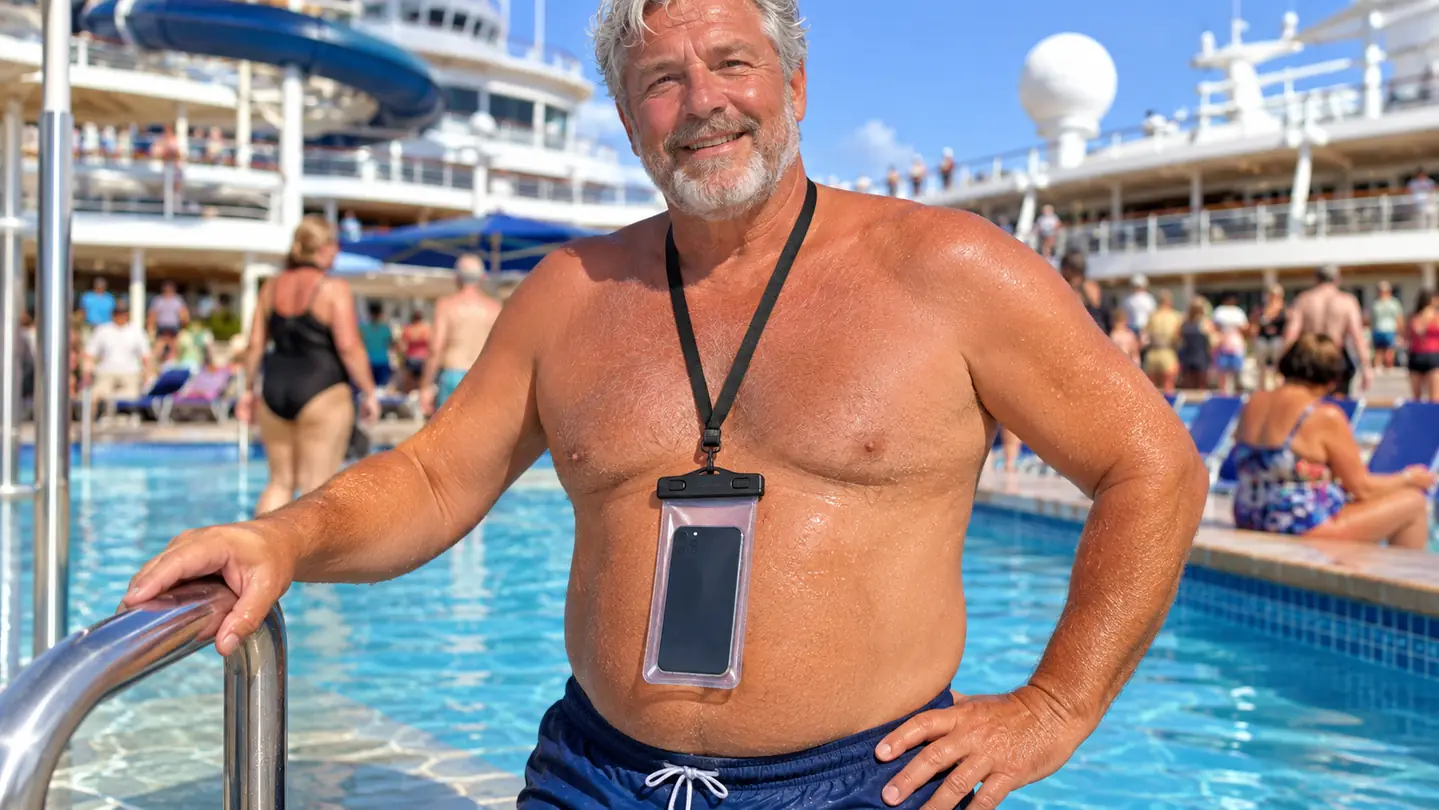
What the Snap and Lock Seal Actually Does
The top of the pouch closes with two stiff plastic rails that press together, fold over, and then snap. It is the same idea as a dry bag for a kayak, scaled down to something that hangs around your neck. JOTO rates it IPX8 and lists 100 feet, which is far deeper than any snorkel trip I will ever take. I have not tested it at 100 feet and I never will. What I can tell you is that it held at snorkel depth in Cozumel, twice. It held in a swimming pool. It held in a rainstorm on a pier in Nassau.
The rails take a firm press with both thumbs. The first time I did it I was too gentle and the two sides did not seat evenly, which I could feel more than see. Now I run my thumb along the whole length after snapping, both directions, and check that the fold sits flat. It takes about four seconds. If you buy one, do that every time. The seal is either fully closed or it is not, and there is no partial credit in the middle.
Sand is the thing to watch. One afternoon at a beach in Costa Maya I opened the pouch with sandy hands and a few grains got into the rail channel. They came out with a wipe and a shake, and the seal was fine afterwards, but I could feel them catching. Now I rinse and dry the pouch at the cabin sink at the end of any beach day before I put the phone back in. It is a thirty second habit that keeps the one moving part of this product clean.
The box comes with a small screen protector, a wet wipe and a dry wipe. I used the wipes on the first trip and now I just use a tissue from the cabin. The protector I never applied, because I did not want to fuss with bubbles on a phone I was about to put in a plastic sleeve. That is a me thing, not a product fault.
Using the Screen Through the Window
The clear window is 3.2 by 6.37 inches and it is genuinely clear. I can read texts, check the time, look at the ship's app for the day's schedule, and take a photo. Typing through the plastic works if you press a little more deliberately than usual. It is not the same as bare glass and nobody would pretend otherwise.
Face unlock is where it gets fiddly. Through the plastic it sometimes takes two or three tries, especially in bright sun on the pool deck where I am squinting and holding the thing at a bad angle. My workaround is the passcode, which is fine for a device I am only checking for ten seconds at a time. If your phone relies completely on face unlock and you have short patience, budget for a bit of grumbling in the first week.
Photos through the window are better than I expected. The snorkel shots I took in Cozumel were usable, and the reason is simple. I was not holding a bare phone over open water, so I actually took the picture instead of leaving the phone in the bag. The pouch let me take a shot I would otherwise have skipped, which is the whole point of the thing.
Does Your Phone Fit? The Sizing Rule I Use
JOTO lists the pouch as fitting devices up to 3.35 by 6.69 inches, with a 7 inch screen size, and notes that certain large phones need the case removed. That last part is the line that matters. Measure your phone with its case on before you assume anything. Mine fits with the case on, just, and the pouch still snaps flat. Gus's is smaller and slides around a little inside, which has never caused a problem.
A phone that is too big does not simply fail to fit. It stretches the pouch and puts pressure on the seal, which is the one thing you cannot afford to compromise. If yours is borderline, take the case off when you use it. That is a two second habit and it buys you margin.
The pouch itself weighs 50 grams, which you will not notice around your neck for an afternoon. It has a glossy finish, so it slides into a beach bag easily and picks up fingerprints at roughly the same rate as the phone inside it. The neck strap is a plain cord with a slider, and it has not frayed in four cruises.
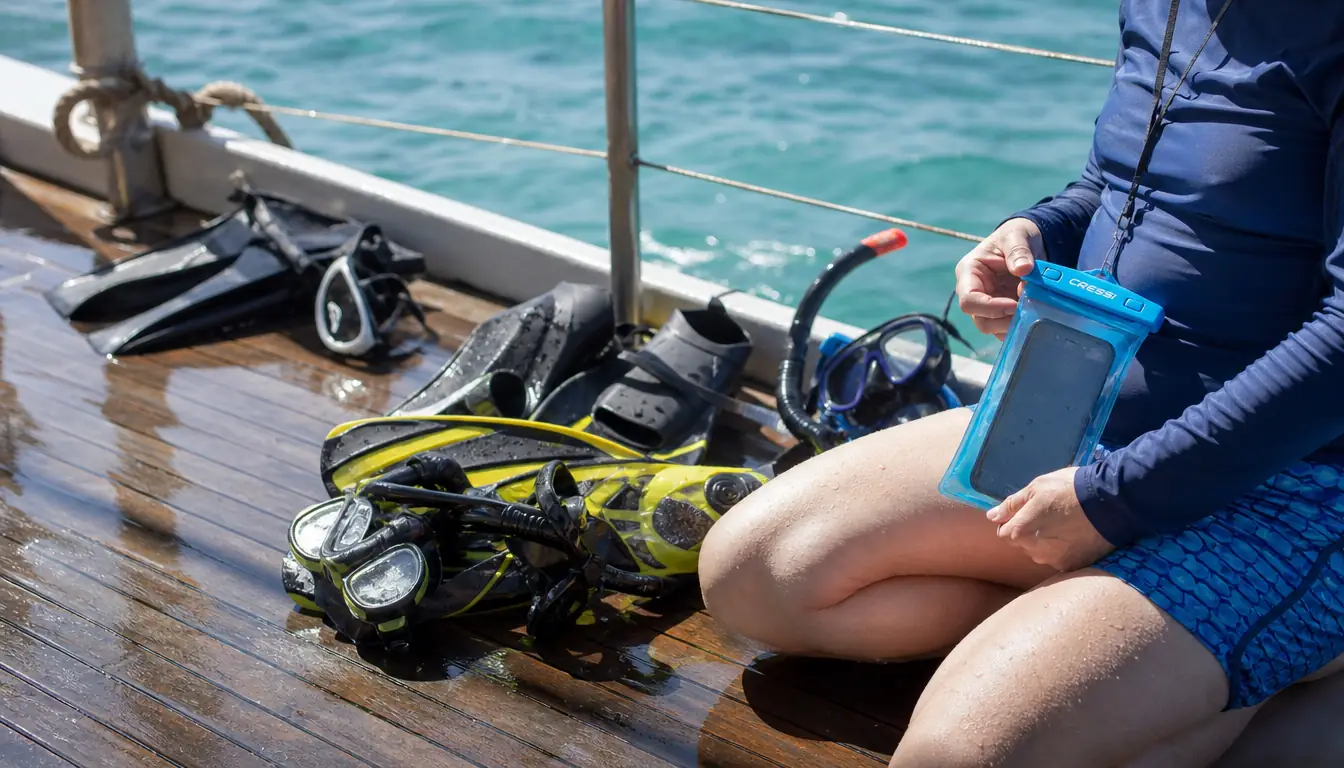
The Pool Deck, the Snorkel Boat, and One Rainy Day
The pool deck is where the pouch earns its place quietly. Phones rarely get dropped into a pool on purpose. They get knocked off a lounger by a towel, or sat on, or set down next to a wet bag. Having mine already sealed and on a lanyard meant I stopped thinking about where to put it. That is a small thing that changes how a sea day feels, and it is the same reason I keep the magnetic hooks by the door.
The snorkel excursion in Cozumel was the real test. We were on a small boat, the deck was wet the whole time, and everyone's gear was in a pile in the middle. My phone went into the pouch, the pouch went around my neck, and I went into the water with it. The pouch is not a flotation device and it does not claim to be, so I kept a hand near it the whole time. It stayed sealed. I took photos at the surface, which is the depth I was ever going to reach anyway.
The rainy day was in Nassau, a walk back to the ship that turned into a proper soaking. My tote got wet through and the paper map inside it turned to mush. The phone in the pouch was dry when I opened it in the cabin. That was the day I stopped thinking of the pouch as snorkel gear and started thinking of it as the thing that protects an expensive object I cannot leave behind on a ship.
One more note on rough days. Gus is the one who feels the motion and I am not, so he spends the first sea day of any sailing sitting still and not doing much. The pouch did not fix that and I would not suggest it does. What it did do is survive being shoved in a drawer and forgotten until the weather settled, which is about all you can ask of anything in a cabin on a rough morning.
What I Liked
- The snap and lock seal has held on four sailings, including two snorkel trips
- IPX8 rated to 100 feet, which covers every pool and snorkel depth a cruiser will actually see
- The clear window is usable for texting, photos and the ship's app
- The neck strap keeps the phone on you instead of on a lounger
- At 50 grams it folds flat and lives in a tote pocket between trips
- Comes with a screen protector and two wipes in the box
Where It Falls Short
- Face unlock through the plastic often needs a second or third try
- Large phones need the case removed to fit inside the stated dimensions
- The seal needs a deliberate thumb press along both rails, which you have to remember every time
- It does not float, so deep water means keeping a hand on it
- Sand in the rails needs cleaning out before the next use
The paper towel I put inside before every trip comes out dry. Four sailings, one snorkel boat, and that is the only test result that matters.
Who This Is For
This is for the cruiser who wants to carry a phone on a beach day or a snorkel excursion and does not want to spend the afternoon worrying about it. If you are the person who takes photos at the water's edge, checks the ship's app for the buffet hours, and texts the neighbor about the mail, the pouch lets you do all of it without a bag from the galley.
It is also for the couple who pack light. Two pouches take up less room than one paperback, they hang on a cabin hook, and they fold flat in a checked suitcase. On a ship where a cabin has one desk and no shelf, that matters more than it sounds.
Who Should Skip It
Skip it if you want a case that lives on your phone all the time. This is a pouch you put the phone into when you need it and take it out when you do not. People who expect to use the camera the way they use it at home, quickly and with nothing in the way, will find that annoying fast.
Skip it too if you are diving, or if you want a hard shell that clamps to a belt or a bike frame. This pouch is soft, it does not float, and it is not built for pressure at depth or for being bashed against coral. I keep separate notes comparing it to a rigid waterproof case, and the honest answer is that the two solve different problems. For a pool deck, a rainy pier and a snorkel vest, this one is enough.
Buy it before cruise eleven, not after
Two of these have ridden in my tote on four sailings out of Port Canaveral. They take up no room, they cost a small fraction of what the phone inside them costs to replace, and they are the reason I still have the phone I took to Cozumel.
Amazon Check Today's Price on Amazon →