

Sea-Band wristbands came into our house before our eighth cruise, and they have been in Gus's dopp kit for seven sailings since. I am Joanne Petrakis, we live about thirty minutes from Port Canaveral, and we have taken fourteen cruises since 2009. Gus is the one who gets queasy when the ship starts to move. I am the one who packs. That division of labor is why I am writing this instead of him.
Here is the short version. The Sea-Band pair is a drug-free wristband that applies pressure to the P6 point on each wrist. It is reusable, washable, HSA/FSA approved, and it takes up almost no room in a suitcase. It is also not a cure, not a guarantee, and not something I would tell you to rely on if you are genuinely ill. Gus finds that it takes the edge off on moderate sea days. That is a smaller claim than some reviews make, and it is the only one I can back up from our own cabin.
What nobody tells you is that buying the bands is the easy part. The hard part is wearing them in the right spot, putting them on before the water gets rough, and being honest with yourself about when a wristband is not enough. Most of the complaints I read about Sea-Band come down to one of those three things, not to the pair itself.
The Quick Verdict
A small, drug-free pair that helps Gus on moderate sea days, as long as he puts them on early and leaves them on the P6 point. Not a replacement for medical advice or medication when the water is truly rough.
Amazon Check Today's Price →A drug-free option for the travel partner who goes quiet when the ship moves
Gus has used the same Sea-Band pair on seven sailings. If your husband or wife is the one who feels every swell, this is a sensible place to start, alongside a conversation with your doctor or pharmacist.
Amazon See the Sea-Band Pair on Amazon →How I've Used Them
We bought the first pair before cruise number eight, which was a short Caribbean sailing out of Port Canaveral. Gus put them on the night before embarkation because he wanted to get ahead of it. He has done that on every sailing since. The same pair has now been on seven cruises, including our Alaska trip out of Seattle in 2019 and our Mediterranean sailing out of Barcelona in 2023.
His routine is simple. The night before we leave, he puts them on after he brushes his teeth. He keeps them on through the first morning and through any day when the ship is moving more than he likes. On calm days he may take them off after breakfast. On rough days he leaves them alone. I do not wear them because I do not get seasick. I am not going to pretend I can review that part.
What I notice is behavioral. A queasy Gus gets quiet and still. He finds a chair and stays in it. A Gus with the bands on is still careful, but he will go to breakfast, walk the promenade, and sit through a show. That is not a lab result. It is a wife's observation after seven sailings, and it is the reason I keep packing them.
The first morning is the real test. Embarkation day is busy, the dining room is loud, and the ship is often moving while everyone finds their sea legs. Gus puts the bands on before that begins. He does not wait until he feels bad. I think that is most of the reason they work for him, and it is the first thing I would tell you to copy.
What Nobody Tells You About Placement
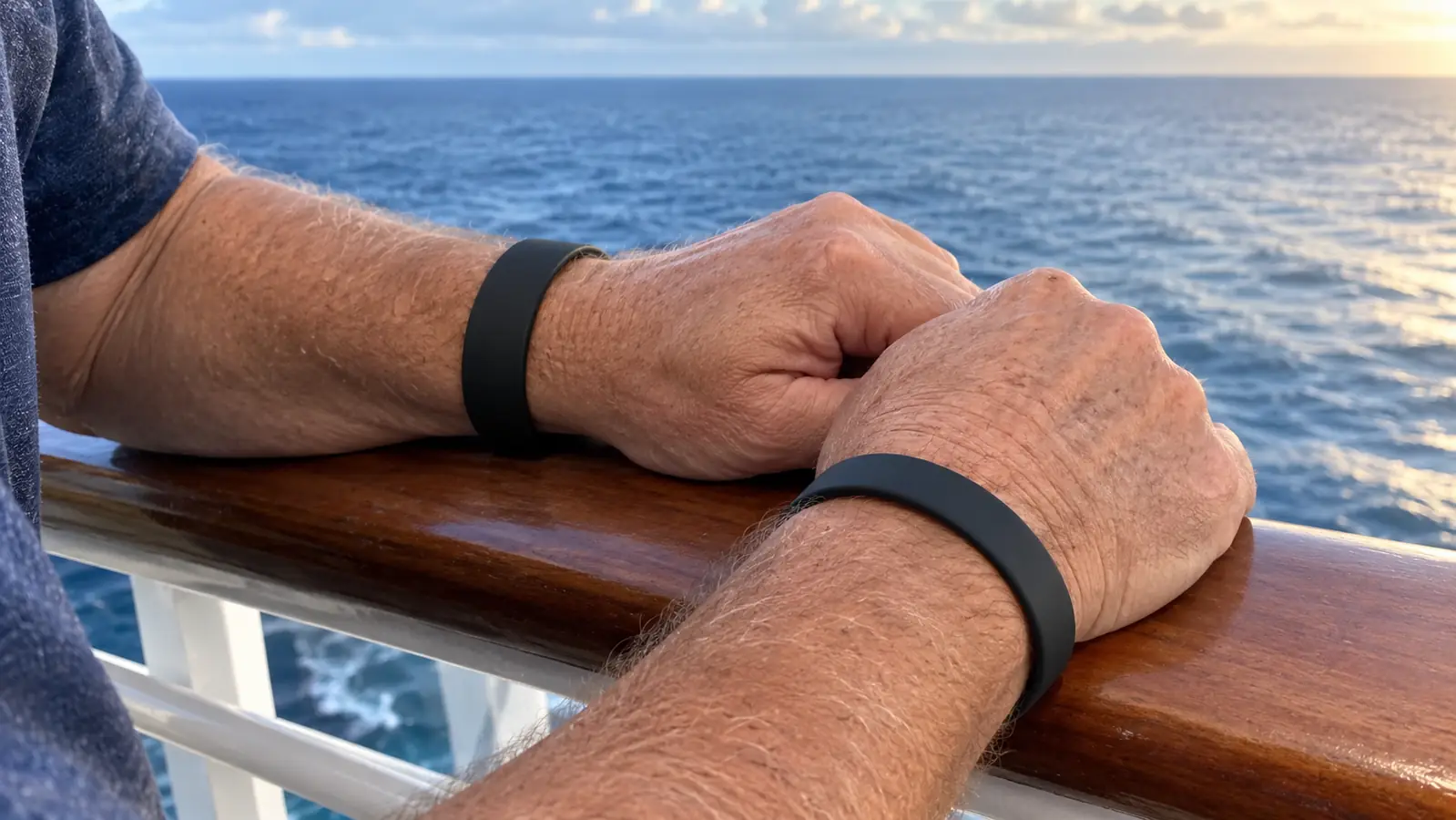
The P6 point is the whole game. The band has to sit on that spot on each wrist, and it has to stay there. If it has slid up his forearm or twisted around, Gus might as well have a bracelet on for decoration. I check both wrists before we leave the cabin, especially on the first morning when he is putting on a jacket and grabbing his cruise card.
The package shows where the point is, and I read it out loud the first time because Gus is the one who forgets things. Now he knows the spot by feel. I still check. It takes ten seconds. If one band has rolled or moved, I have him fix it before we go to breakfast. That small habit has saved us more trouble than many gadgets we have bought for the cabin.
Put them on early. Gus puts them on the night before embarkation, and he keeps them on through the first morning. If he waited until he was already queasy, he would be chasing the problem instead of getting ahead of it. I cannot tell you the bands will rescue you once you are green. I can tell you Gus puts them on before the worst of it, and that is the habit I would copy.
Fit matters more than I expected. The band has to sit flat enough to do its job without being so uncomfortable that Gus takes it off. He has never complained about the feel, but he also does not wear it loose. I check that both bands are sitting where they should be, not pushed up under his sleeve. If you are the kind of person who fiddles with a watch all day, you will need to leave these alone.
The Honest Limits
First, these are not a cure. Sea-Band does not promise that, and I will not either. They are a drug-free pair of wristbands that apply pressure to the P6 point. That is the entire idea. If you are looking for something that will make rough water feel like a swimming pool, keep looking. If you want a small tool that may take the edge off, this is that tool.
Second, they do not work for everyone. I have read enough reviews to know that some people feel nothing and some people swear by them. I can only tell you what happened in our cabin. Gus feels a difference often enough that he asks for them. That is not proof for your body. It is a reason to try them if you are like him and you want a drug-free option first.
Third, rough water can beat them. On one choppy night in the Mediterranean, Gus still felt rough. He did not blame the band. He went to bed early and we stayed close to the cabin. If you are vomiting, dizzy for hours, or unable to keep water down, talk to the ship's medical team or a pharmacist. A wristband is not the plan for that. It is a small measure for a moderate day.
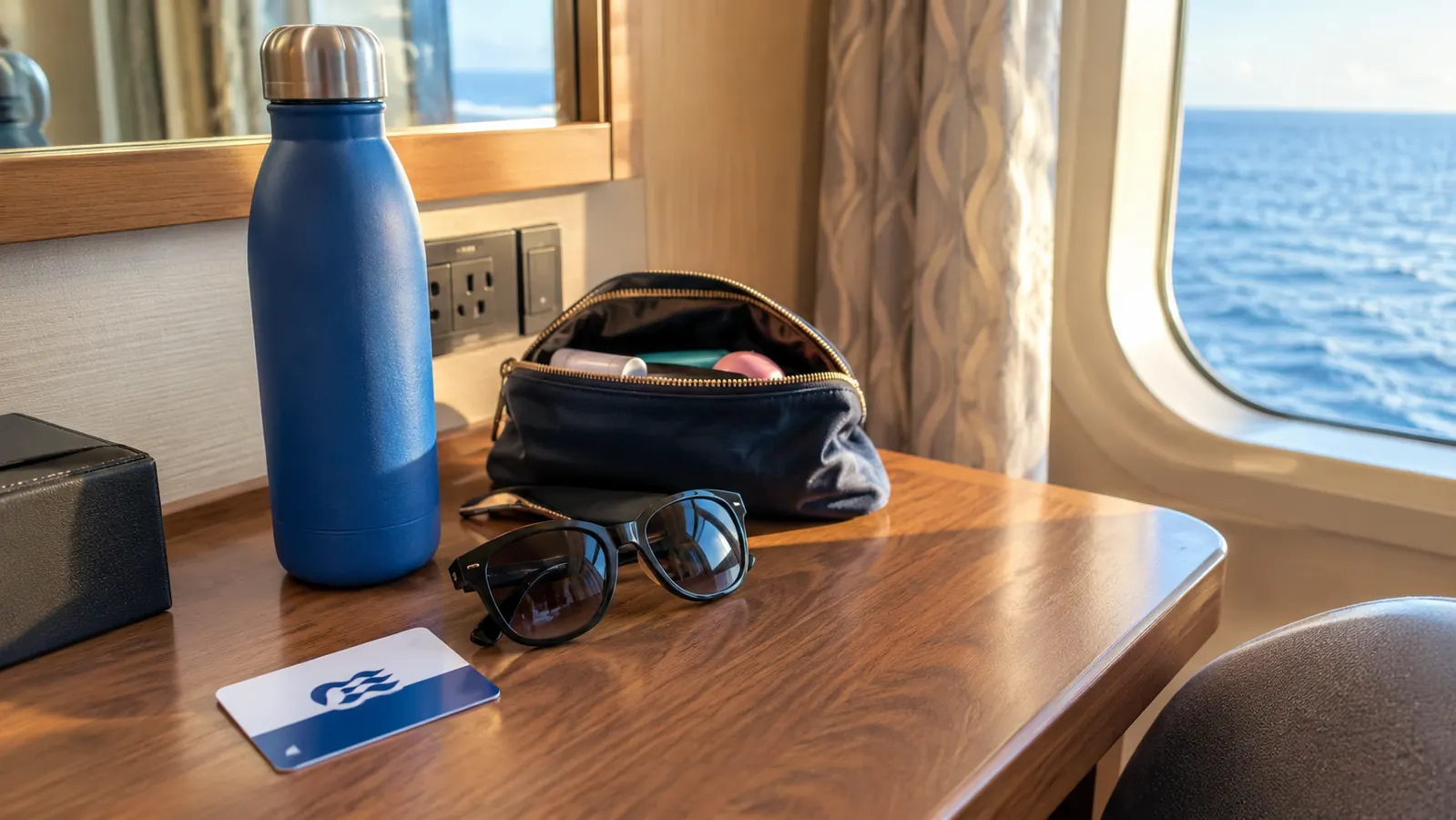
Fourth, the pair is small, which is good until it is not. One band can disappear in a cabin. We keep both in a small pouch in Gus's dopp kit, and we count them on the last night. I have not lost one yet, but I understand how it happens. A pair is only useful if you have both of them.
Seven sailings, one pair, and Gus still puts them on the night before we leave. That is not proof. It is a habit, and a habit is what actually gets used on board.
Care, Packing, and the Cabin Reality
Sea-Band says the pair is reusable and washable, so I wash them in the sink with a little hand soap and let them air dry. I do that at the end of a cruise, not every day. They have held up through seven sailings. The listing puts the package at one ounce, which is about as close to nothing as a travel item gets. They go in the dopp kit, not in the bottom of a suitcase where they will be forgotten.
Our cabins are usually interior or oceanview because a balcony is not where we want our attention. That means counter space is tight and every item has to earn its spot. The bands do not need counter space. They do not need to be charged. They do not need a plug. They sit in the pouch until Gus needs them, and then they sit on his wrists. That is the kind of low-drama item I like.
I also like that the pair is drug-free and HSA/FSA approved. That does not make it right for everyone, and it does not replace a conversation with your doctor or pharmacist. It does make it easy to try before you move to something stronger. Gus likes that he is not taking a pill every morning of a cruise. I like that I am not packing another bottle.
Packing is the part people underestimate. The bands are small enough to lose and small enough to bring. I put them in the same pouch as Gus's other travel supplies, and I put the pouch in his dopp kit. On the night before embarkation, he knows where they are. That sounds fussy. It is not. It is the difference between using a small tool and remembering you brought it.
The Part That Surprised Me
I expected the bands to be a one-cruise experiment. I did not expect them to become part of Gus's routine. He is not a gadget person. He does not read reviews or compare specs. He cares about whether a thing works when he needs it. After the first sailing, he asked me to pack them again. After the seventh, he still asks. That is a better review than anything I could write in a paragraph.
The second surprise is that they are not just for the ship. Gus has used them in the car on the way to Port Canaveral and on a small boat on a port day. The listing mentions car sickness, and I understand why. The same pressure point is there whether you are on a ship, in a car, or on a tender boat. I would not leave them in the cabin on a port day if you have a rough tender ride ahead.
The third surprise is how little space they take and how little attention they demand. A gadget that needs charging or setup is a gadget I resent by day three. The Sea-Band pair does not. It sits in the pouch, it goes on the wrists, and it stays there. If Gus takes it off, it goes back in the pouch. There is no app, no battery, no manual to lose. For a small cabin, that matters.
The fourth surprise is that I would recommend them to a friend before I would recommend a lot of cruise gear. That is not because they are exciting. It is because they solve a small problem with almost no fuss. If you have a travel partner who gets queasy, a pair of Sea-Band wristbands is a reasonable first thing to try. If you have a travel partner who is fine, skip them and save the pouch space for something else.
I am not saying the bands replaced everything. Gus still watches the horizon, still eats lighter on the first day, and still knows where the bathroom is. The bands are one part of a routine that includes sleep, water, and not overdoing it on the first night. If you treat them as the whole plan, you will be disappointed.
What I Liked
- Drug-free and listed with no drug interactions
- Reusable and washable, so one pair has lasted seven sailings
- Small and light, listed at one ounce
- HSA/FSA approved
- Easy for Gus to put on the night before embarkation and leave alone
Where It Falls Short
- Placement on the P6 point is easy to get wrong
- Not a cure and not enough on the roughest nights
- Does not work for every person
- A pair is easy to misplace in a small cabin
- You have to put them on before you feel bad
Who This Is For
This is for the traveler who gets mildly queasy on ships and wants to try a drug-free option before moving to medication. It is for the person who is willing to put the bands on early and check the placement. It is for the husband or wife who does the packing and wants one less thing to worry about. Gus is 64, retired from HVAC, and not a man who likes a lot of fuss. The Sea-Band pair suits him because it is quiet and small.
It is also for the cruiser who books an interior or oceanview cabin and has learned that space is a real constraint. The pair takes up almost nothing. It does not need to be charged or plugged in. It does not care whether the cabin has one outlet or two. If you want a small tool that is easy to bring and easy to use, this fits that job.
One more thing. The bands are not a substitute for choosing a sensible cabin. We still book midship when we can, because the middle of the ship moves less than the front or the back. The bands help Gus, but they do not turn a rough cabin into a calm one. If you are prone to seasickness, book the cabin you can live with and pack the bands as backup.
Who Should Skip It
Skip it if you need reliable relief for serious nausea. A wristband is not a substitute for medical advice, and it is not the right plan if you are vomiting or dizzy for hours. Skip it if you will not wear it before you feel bad. Gus puts his on the night before embarkation because that is what works for him. If you are going to wait until you are queasy and then dig through a suitcase, the bands are not going to save the day.
Skip it if you want a guarantee. No wristband can give you that. Skip it if you cannot keep track of small things, because a pair is only useful when you have both bands. And skip it if you are looking for a cure. Sea-Band is a small, drug-free measure for moderate discomfort. That is enough for our cabin. It may not be enough for yours.
The pair that earned its spot in Gus's dopp kit
Seven sailings, one small pouch, and no charging cable. If you want a drug-free option to try before the water gets rough, start here.
Amazon See the Sea-Band Pair on Amazon →